
It’s been a month of quiet contemplation. Not to go too deep on a Thursday and stray away from the task in hand, but seeing friends deal with losses and feeling their pain both personally and empathetically, leads to existential thoughts. There are both positives and negatives to this, the former being strength and resilience can be drawn upon and found, resolutions to live a meaningful life re-established, the value of life reaffirmed…
But to witness a story in the moment with knowledge of its outcome is a privilege (or perhaps, curse) only afforded in works of art with the benefit of narrative play.
(or of course on Reddit – tag those spoilers people!).
There was a moment last night when our trusted narrator broke off to tell us of the sad fate of what was to become of two of the characters, before returning to the present tense of the story. From that moment in, there was a sadness in the air and slowly the rest of the story started to bear witness to why and how they’d reach that fate. And this is why life is designed this way, I guess. Live in the moment indeed.
“I want to dance, Kate. It’s the festival of Lughnasa. I’m only thirty-five. I want to dance.”
On the outskirts of Ballybeg, County Donegal, the five Mundy sisters’ lives are bound by responsibilities and social expectations.
When influences from a wider, more modern world creep into their home, the sisters are swept along in a sea of change and suddenly the life they know is gone for good.
Brian Friel’s multi-award-winning drama is a powerful and moving exploration of reflection, memory and how the future will arrive no matter how much we resist.
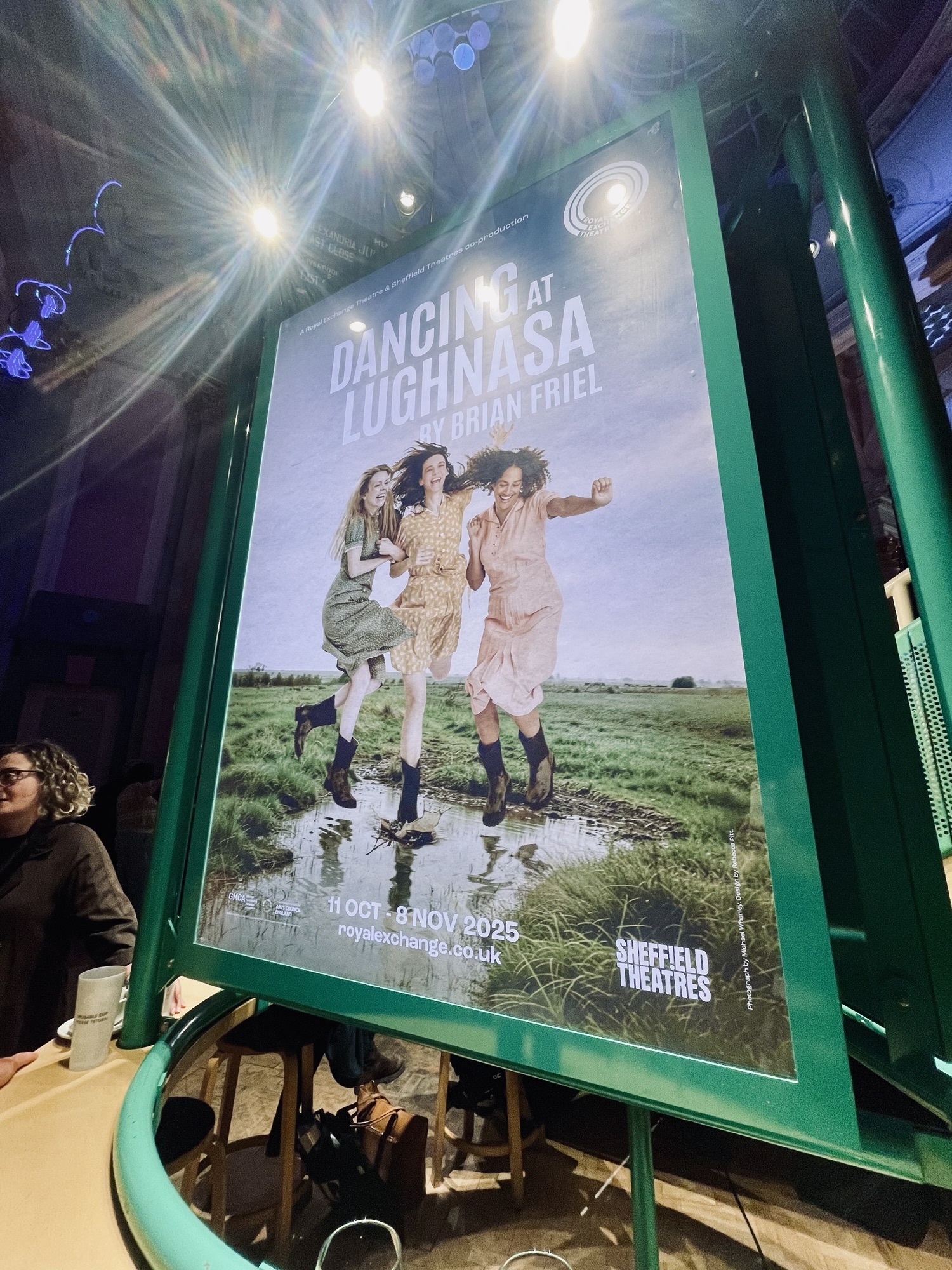
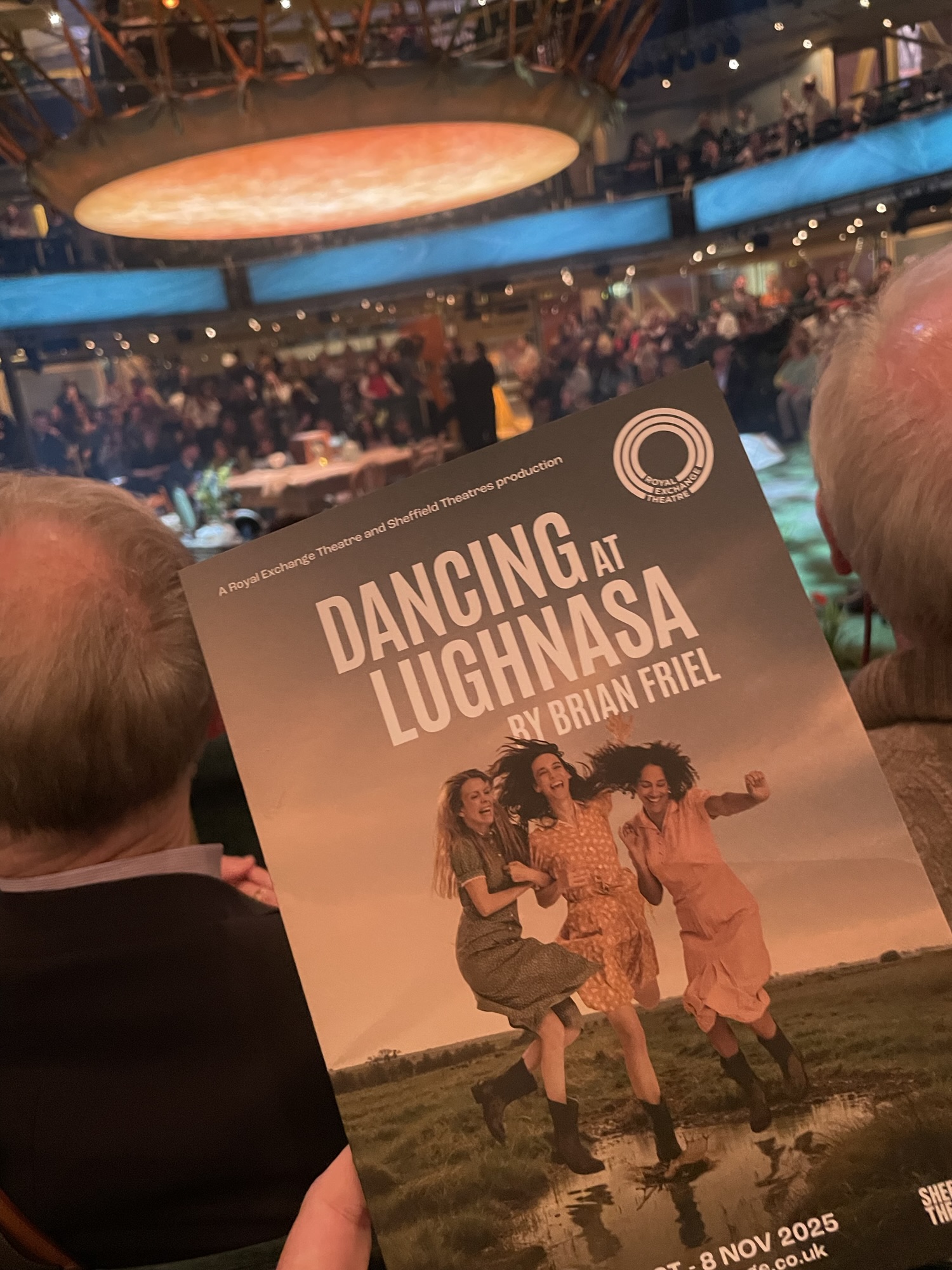
We’re back in the round at the exquisite Royal Exchange, and the scene is set. We’re in a modest cottage and yard in Donegal, Ireland, and our sisters are introduced.
Reminiscent of Little Women, the group – Margaret (Siobhan O’Kelly), Rose (Rachel O’Connell), Kate (Natalie Radmall-Quirke), Agnes (Laura Pyper) and Christina (Martha Dunlea) are tight and together, both in locality and spiritually.
All so different in temperament, we see there is a love for each other that binds them, testament not only to the words of the play but in the way that the actresses embody them. When watching them berate, chide, call out, admonish, and clearly love and care for each other as each navigate surviving life together, you can’t help but be drawn in to their joy, none moreso when dancing and forgetting themselves.


But don’t worry – what to some (me) could initially cause concern that we are about to enter a world of the twee, the prim and proper, the rigidly choreographed; this is not it. In the moment, the ladies are in skirts and their boots, high-kicking round the kitchen and exuding sheer short-lived joy and exhilaration. Until suddenly they are not.
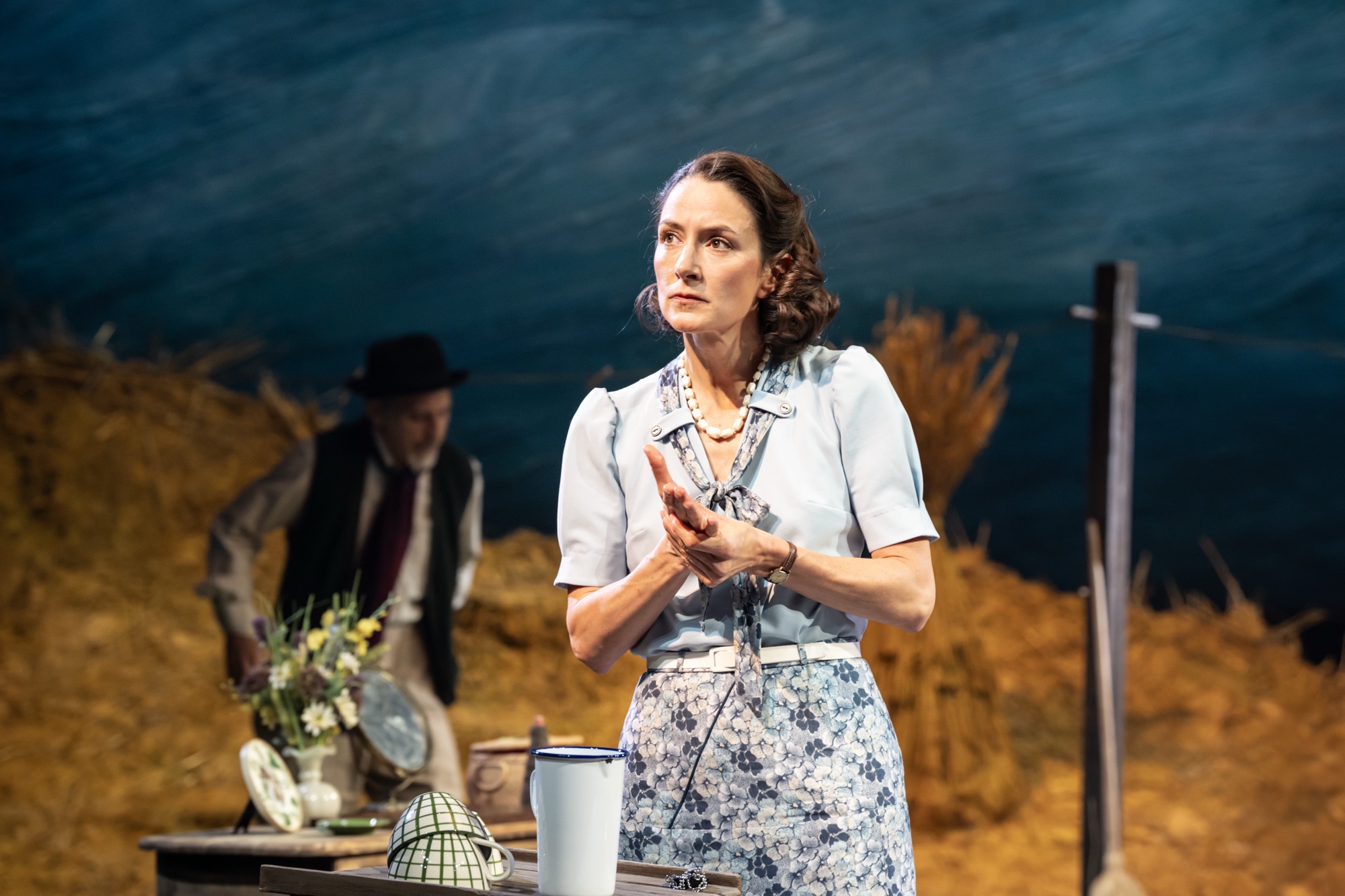


Dancing at Lughnasa is narrated from the perspective of the adult Michael (Kwaku Fortune), the illegitimate child of Christine and a seemingly long-absent travelling gramophone salesman, Gerry Evans(Marcus Rutherford) . Whilst featured in the telling, we never see the young Michael, just the reactions of the sisters to him as the mature Michael provides the commentary of his mother and aunts; his world and for the most part, the only man in theirs.
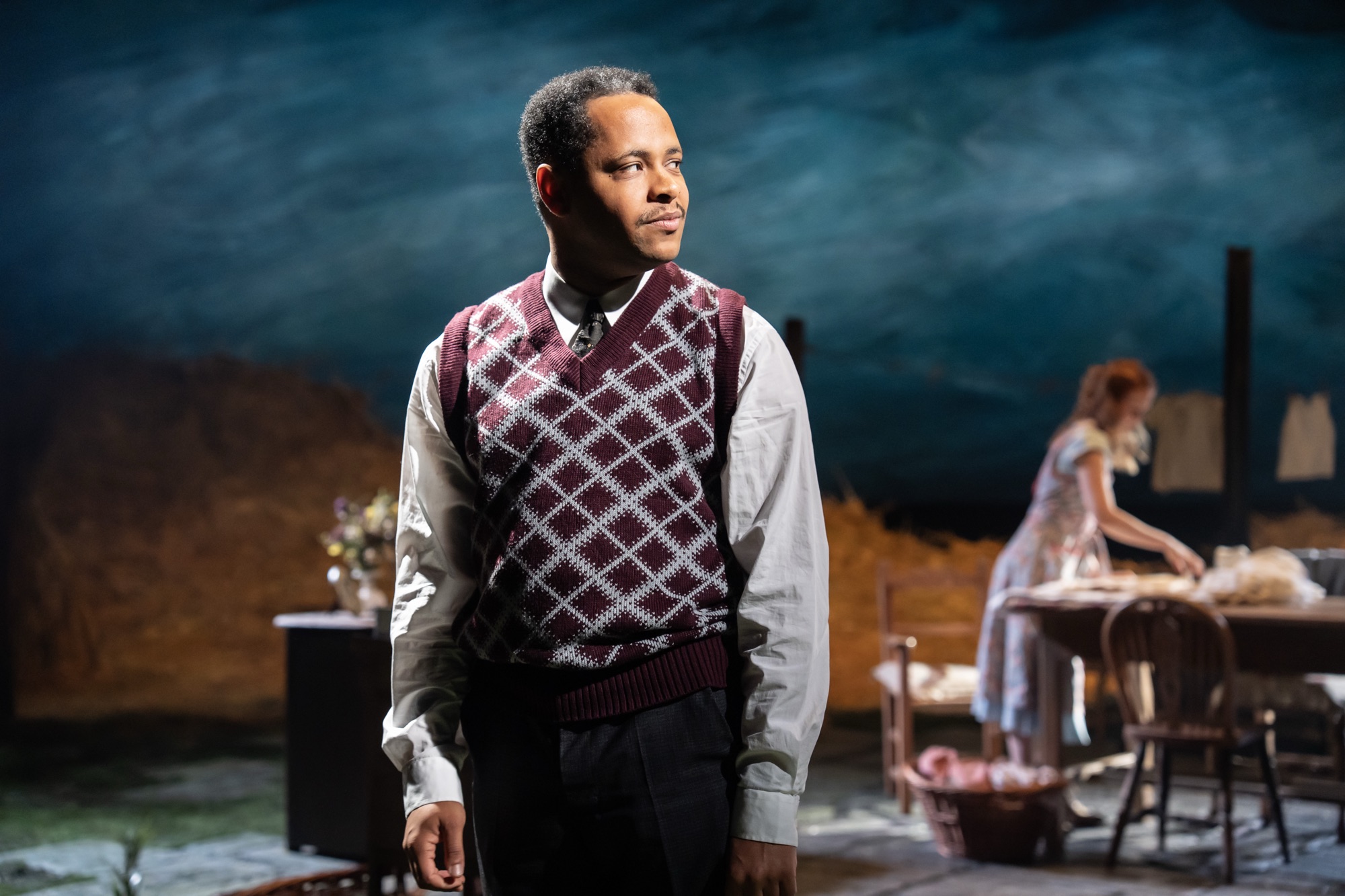
Equilibrium of the sisters’ lives is first broken by the return of Father Jack (no, not that one) played, by Frank Laverty. Jack is their brother, a priest and missionary who returns to the family home from Uganda, where he has been living at a leper colony. Jack returns not only with a clouded memory due to the affects of malaria, but with a seemingly abandoned affiliation for his catholic faith, much to the worry of the sisters.
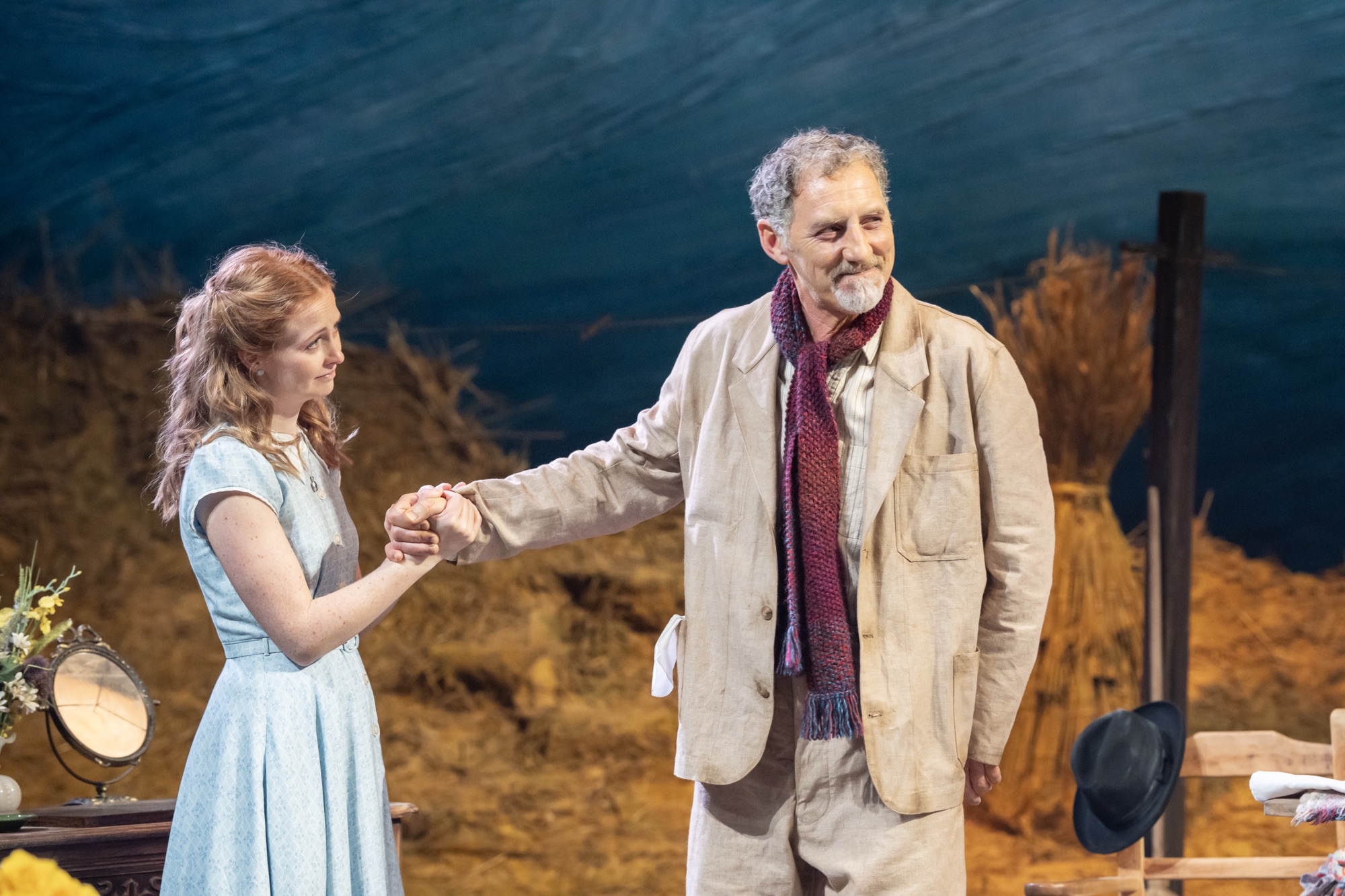
Our second figure to return to their lives, is in the form of one flighty Gerry Evans,, clearly to the initial shock but then quickly re-enamoured Christina, the worryingly equal delight of Agnes, and mistrust and derision of Kate and Margaret. Our lovely, flighty Rose is too distracted with her white rooster…His affability and joking hides a multitude of sins and seeks to distract from the consequences of his fleeting impositions on their lives.

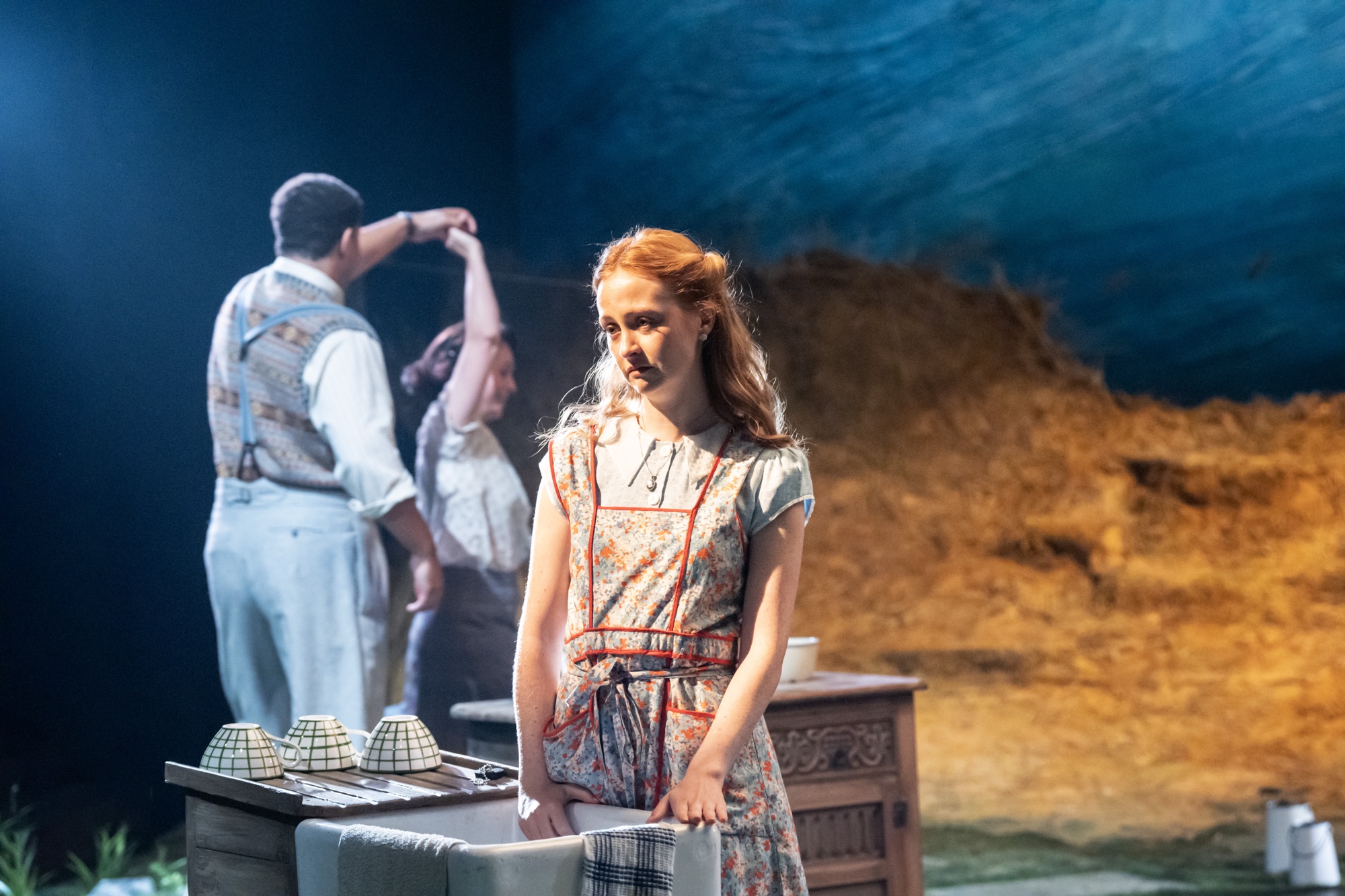
Whilst upset and concern steadily and occasionally gives way to hope, disappointment, broken promises, and poverty become overriding factors, resulting in a pull to England for two of our sisters, causes physical division. The world keeps on turning and external influences and people chip away and threaten to break their collective strength.
At the end of the play he sad and eventual unseen decline and story’s end of one sister, is foreshadowed in a linear narrative sense (but with the benefit of hindsight given the revelation I refer to at the start of this post). This was a powerful scene where although not explicitly spelled out, a happening is alluded to and along with the other characters in the play, we bear witness to a broken spirit and sudden loss of light in her eyes.
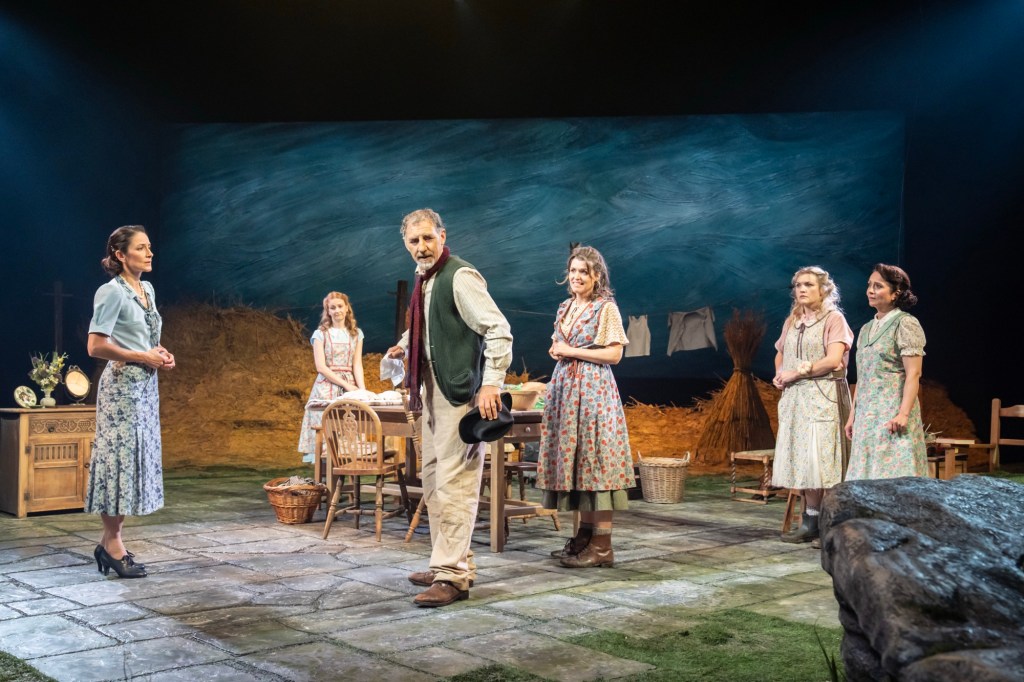
Sometimes revolving in this theatre, this set is static and the actors take us on a journey as they take the lead in move our focus and attention to different areas of the cottage and yard. Our centrepiece is a beautiful, elevated light, working in tandem with the progressing narrative to reflect tone and feeling. The smoking chimney of the range is charming, as is the tree with its falling leaves as an increasingly bothersome Gerry Evans continues in his energetic pursuits to seemingly reinvigorate interest from not just one but two sisters.
This production, directed by Elizabeth Newman, works especially well in the round as we truly are invited into an intimate world, as guided by our narrator. As our two aforementioned visitors enter and exit, on each occasion tossing a metaphorical pebble into the sisters’ worlds causing ripples, pause for thought and an increasing sense of disequilibrium, the only other glimpse into the external world is by the spot lit bales of hay as seen beyond the open doors, a charmingly effective device.

In just over two hours, Dancing in Lughnasa is a story that quickly lets outsiders in, and touches our emotions. And whilst many a production has taken place, including a film starring none other than Ms Streep herself, I can’t imagine the story told and lived out by anyone other than this outfit on Wednesday evening.
Dancing at Lughnasa, a Royal Exchange Theatre and Sheffield Theatres production, can be seen at Royal Exchange, Manchester, until 8 November. For more details and to book tickets, visit https://www.royalexchange.co.uk/event/dancing-at-lughnasa/
Production Credits: Johan Persson
 honorary manc
Leave a comment