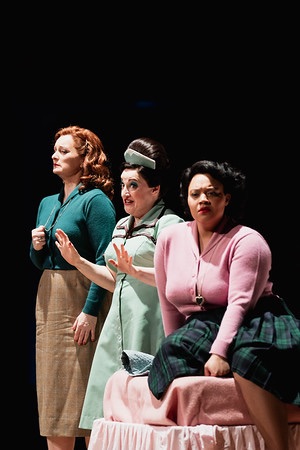
Continuing the wonderful partnership that is English National Opera (ENO) with Greater Manchester, last night saw the first of two performances of Wolfgang Amadeus Mozart’s comic production Così fan tutte. Now, readers, this translates to Thus Do All (Women). And in this context, what it is that all women supposedly do is not the best.
Ferrando and Guglielmo reckon they’re loved-up for life, secure in romantic bliss with fiancées Dorabella and Fiordiligi. Don Alfonso, their older and more cynical pal, begs to differ. “Così fan tutte,” he tells the brothers. Women are all the same. And then he sets about trying to prove them wrong…
Love, loyalty and the vagaries of human natures come under the microscope in Mozart’s comic masterpiece.
Essentially the underlying theme to this story is ‘women, eh? nightmares’.
And whilst our two main female characters walk a tightrope on their part in dispelling this myth, it has to be said that the men in this story play their equal part in bringing questionable activity to the forefront.
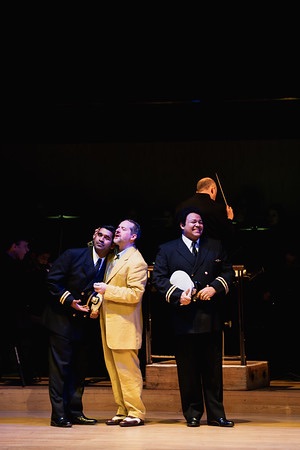
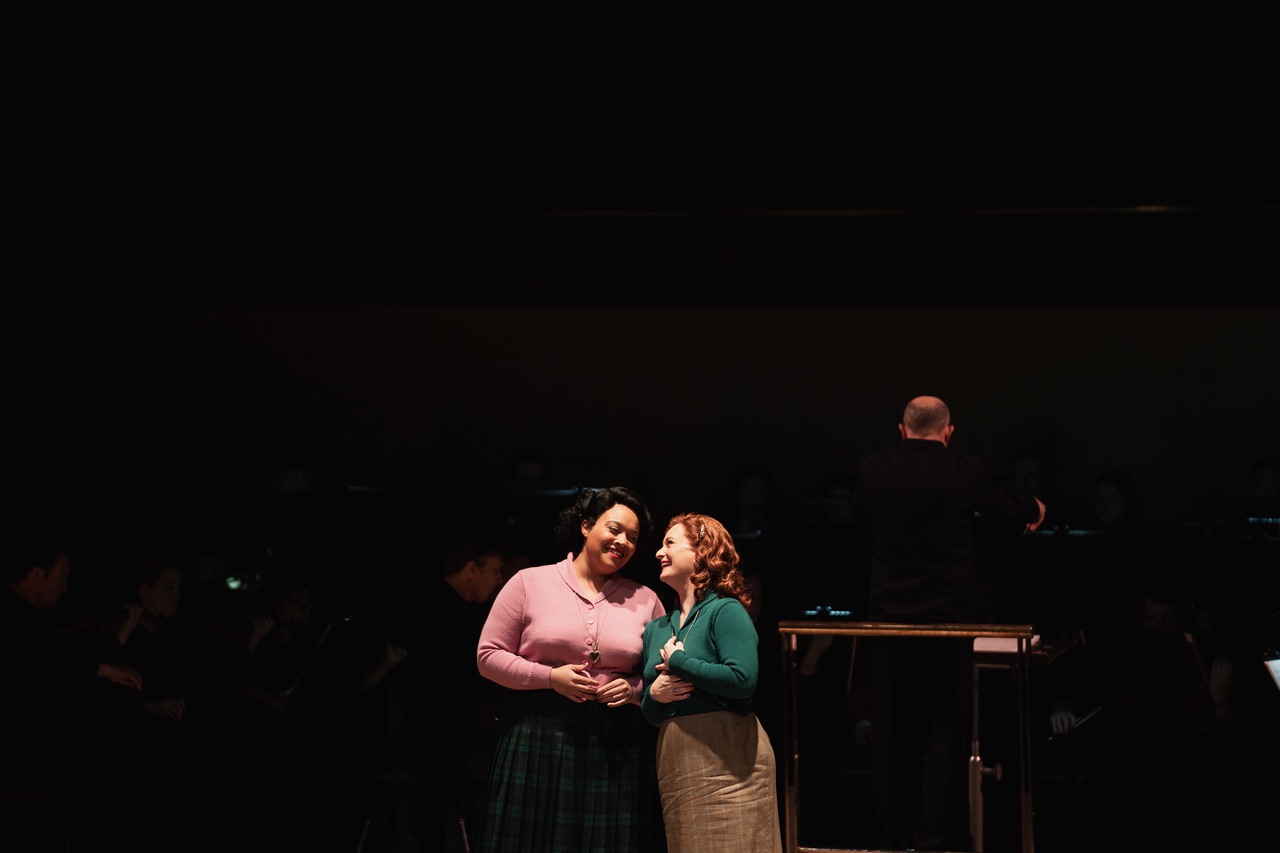
Ferrando (Tenor, Joshua Blue) and Guglielmo (Baritone, Darwin Prakash) are on holiday with their fiancees, sisters Dorabella (Mezzo-sprano, Taylor Raven) and Fiordiligi (Soprano, Lucy Crowe). The men’s new ‘friend’, Don Alfonso (Bass-baritone, Andrew Foster-Williams) makes a bet with them that the two women – like all women – are not to be trusted. To prove his point, a ruse is set up where the women are told their men have been called to war, only for them to rock up soon after – in disguise – ready to put them to the test as two strangers out to heal their heartache and seduce the sisters. Helping the dastardly Don Alfonso to prove his point and win his bet is motel chanbermaid, Despina (Soprano, Ailish Tynan), who for a small sum, is happy to encourage her fellow women to forget their fiances and follow temptation.
Do the sisters succeed in staying faithful? Ah now, that would be a spoiler right there.
Written and premiering in 1790, just a year before Mozart’s premature death, the story is a satire on love, lust and loyalty, and its comedic elements were drawn out valiantly and brilliantly by the company on stage.
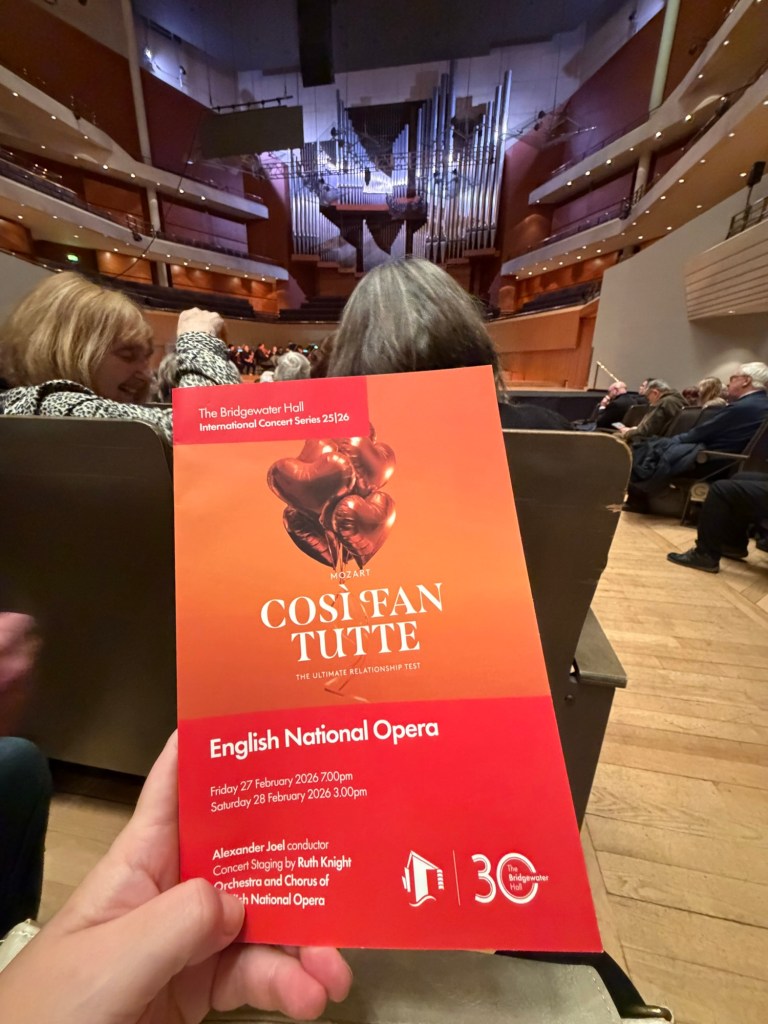
This is ENO’s first performance at the beautiful Bridgewater Hall, itself, currently enjoying its 30th anniversary.
It follows the company’s wonderful production of Benjamin Britten’s Albert Herring, back in Salford at the Lowry last October (you can read my review here: Albert Herring – English National Opera at the Lowry).
There’s nothing more than that feeling of privilege and gratitude when in the company of true talent. Conductor, Alexander Joel and First violinist, David Adams lead the orchestra who bring us the beautiful and sweeping musical phrasing so recognisable as the work of the genius Mozart. Married together with the astonishingly beautiful vocals from the lead singers and chorus who made appearances throughout, and with the first class acoustics of the venue, it was a case of take your seat, do nothing but simply bask in the presence of pure artistry.
And as alluded to before, the juxtaposition of the classical with the comedic was a joy to behold. You know when you go to a performance of a classic text described as humorous, and some are eager to demonstrate how utterly amused they are by the prior knowledge of signposted to jokes, performatively guffawing at a one-liner in olde Shakespearean language?
Well this was actually funny. And I indeed ‘laughed out loud. It helps that the lyrics were translated and displayed in English, of course, but gesticulations, facial expressions and delivery of lines even in the operatic style were funny and timed to perfection.
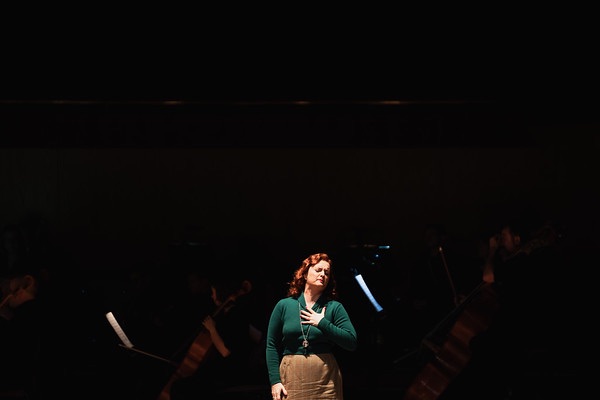
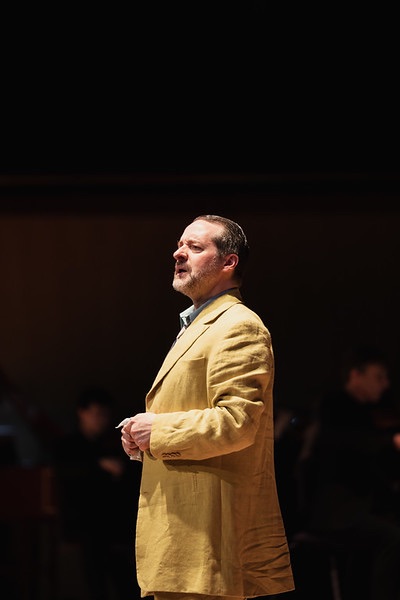
This was a semi-staged concert performance, meaning minimal props, sets and costumes. Those that were available were utilised well, almost surreally turning soldiers into teddy-boys- with the aide of brown leather jackets that David Brent would be happy to sport, turned up jeans and hair straight out of the Fonz playbook. And with the 50s dress styles donned by the sisters, there was enough here to appreciate visually.
My only leaning towards the negative comment on the production (and this is not in the hands of ENO so no criticisms there), is in the length of the performance. Now in operatic terms, a duration of 3 hours 15 minutes, really is nothing. And reader? Not being my first rodeo, I’ve attended rodeos longer and more intense than this. I guess the fact that there are two acts with a fairly simple premise throughout that takes few twists and turns to reach its destination, did make for a plot that was more drawn out than needs to be.
But who am I to dare criticise an artistic approach taken centuries ago (the gall). But what it did mean is that it provided the extended opportunity to enjoy the production in every other sense, and for that I can’t complain.
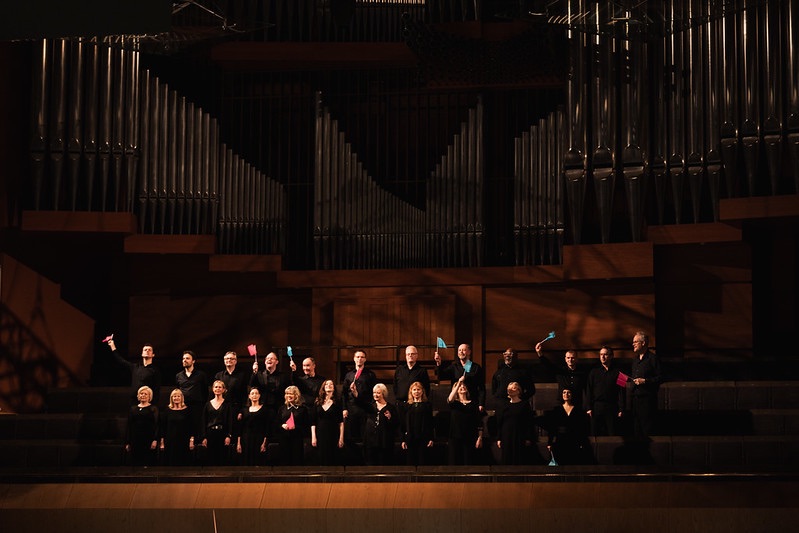
It’s so lovely having you, English National Opera. Come back and see us again soon.
You can read more about the production with a further opportunity to see for yourselves at today’s matinee (rush now!) at English National Opera | The Bridgewater Hall.
For more information on the English National Opera, visit Home – ENO.
 honorary manc
Leave a comment