
I’ve done it.
I’ve completed the holy trinity of moving, animal-based theatre.
A triptych, if you like, of creature tear-jerkers which, for those who know me, will also know that that is my Everest.

It all started with Watership Down, with a stop along the way to Born Free, with frequent accidental visits to Attenborough’s back catalogue of wildlife wonders when, guaranteed, I’ll land just on the moment when something terrible is about to happen between two beasts, large or small, in the wild.
Vet programmes? Forget it.
You see, I can gorge on dramas. plays, films where my fellow humans are suffering left right and centre (I mean I’ll feel a pang – I’m not a total monster), but give me a dog looking slightly put-out with a sore toe and I’m on the floor in floods of tears.
And so. I made it through War Horse . Last year I emerged from the other side of The Lion King. And last night I conquered Life of Pi – emotions all over the show but, as with the other two sides of the triangle of traumatic theatre, a sense of open-mouthed wonderment that only a beautiful piece of art can give you.
After an epic storm in the Pacific Ocean, Pi is stranded on a lifeboat with four other survivors – a hyena, a zebra, an orangutan, and a Royal Bengal tiger.
This year’s Christmas show at The Lowry is really something rather special.
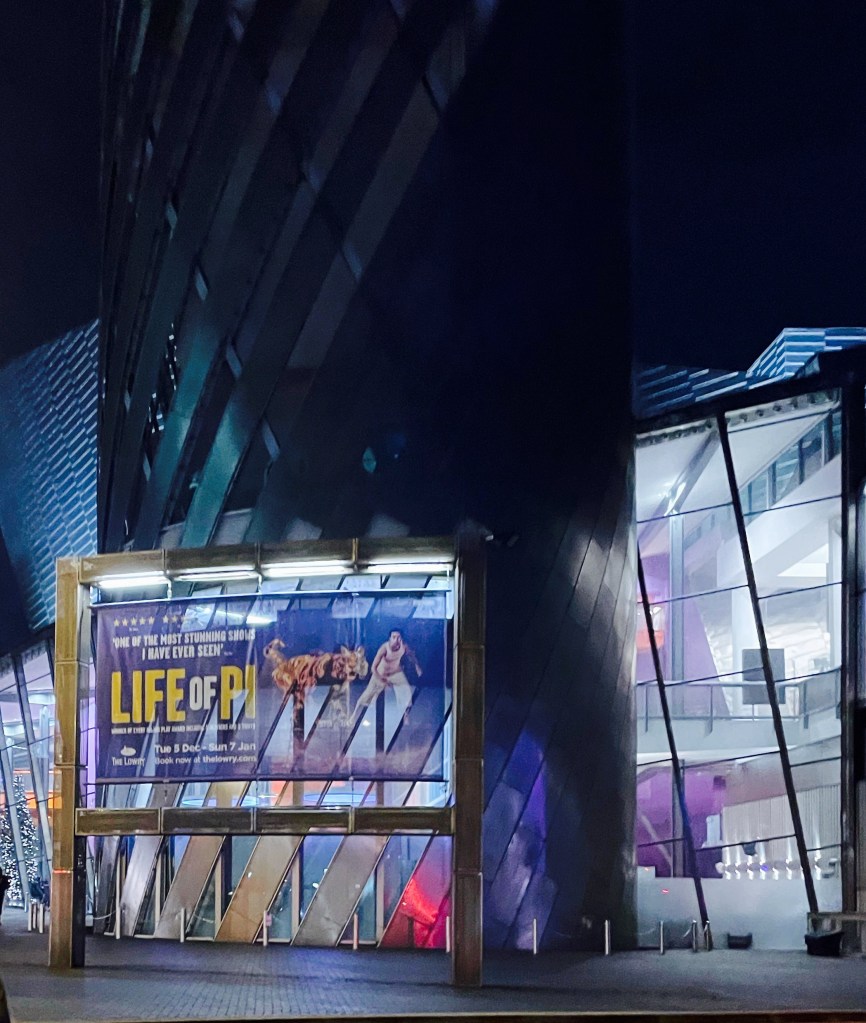
In terms of the story, those who are familiar with the Man Booker prize novel, or the film, will know that there are many layers to the narrative.
It deals with themes such as loss, religion, faith, spirituality, endurance, hope and resilience.
I could go on. There is much to dissect about symbolism, our relationship with the animal kingdom, how much of Pi’s tale is symbolic, analogical, psychological, spiritual; and that gift lies with each witness to this beautiful show.
So whilst I have my own thoughts, I shall turn to the specifics of this, the theatrical version of this great story.
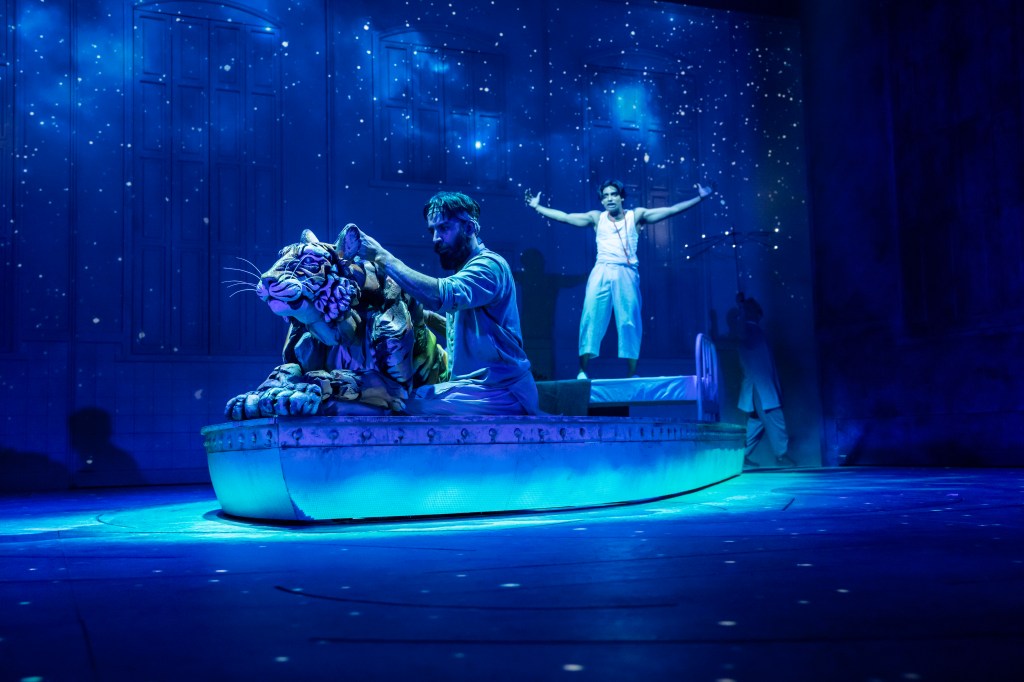
And I’ll go back to the word beautiful. The visuals are stunning – the colours in the opening scenes vivid and the transitions between sets have a fluidity that isn’t intrusive or distracting from the tale being told. I’m noticing more and more the attention to choreography in theatre as the ensemble seamlessly move not only themselves from scene to scene but are instrumental in manipulating the sets and props and morphing them into the next backdrop and location. Near gone are the days when mysterious men in black would appear stage right to redress the set before quickly disappearing stage left.
We start off with Pi in (actually under) the hospital bed in a stark ward, ready to tell her tale to the authorities of how the ship transporting her family from India to Canada, amidst political unrest of the late 70s) (and animals to new abodes in North America), came to sink and how she survived, washed up on shore.
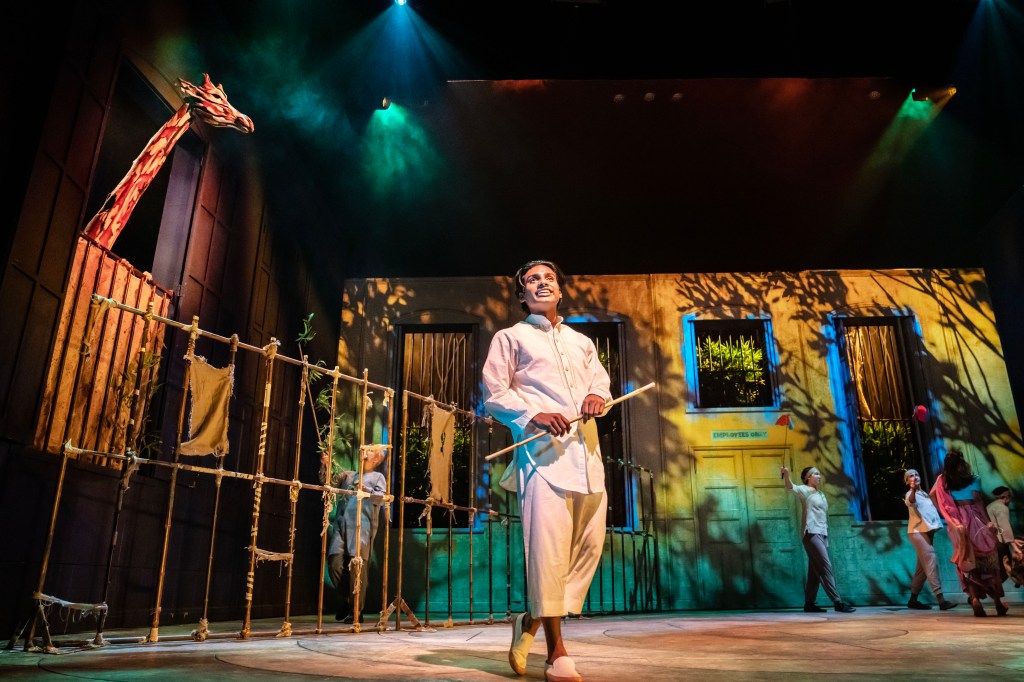
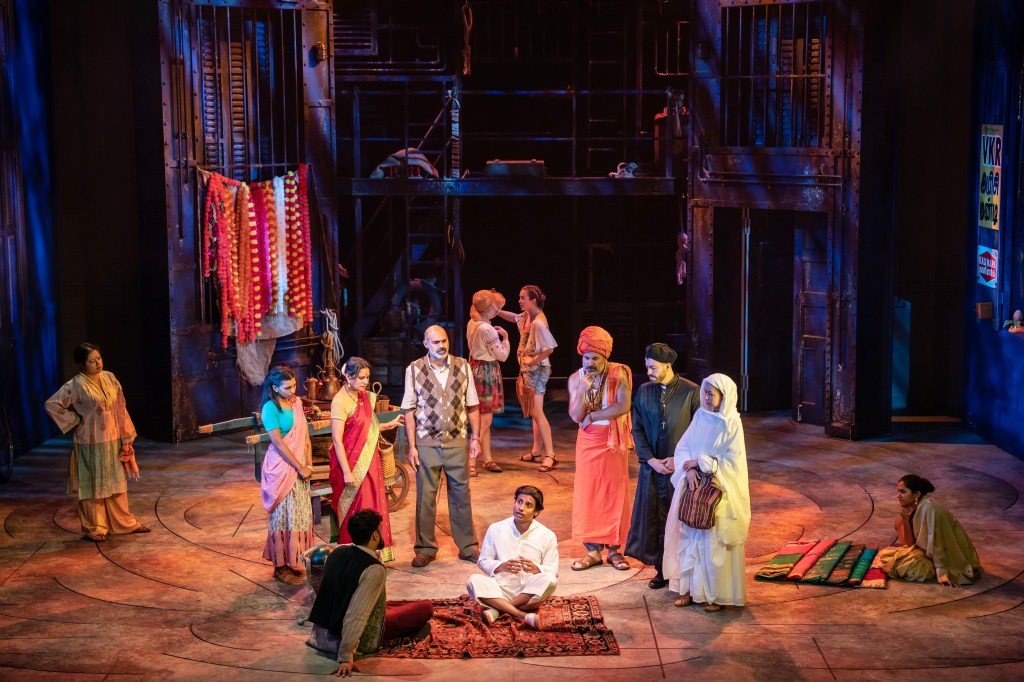
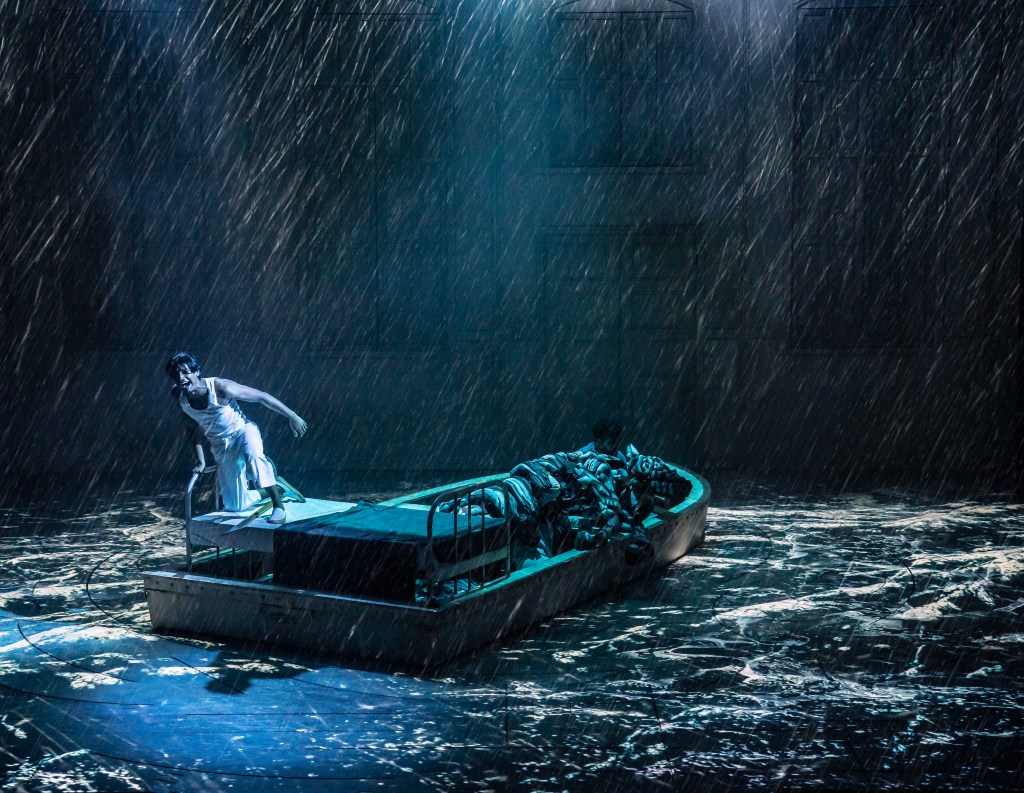
As Pi takes us back, we’re at the family zoo, the street market, on the high seas, the ship, the lifeboat – all depicted with the aid of some wonderful vibrant sets, lighting and sound effects that transport the audience from their theatre seats in Salford, not only geographically but spiritually into a magical place that transcends traditional travel.
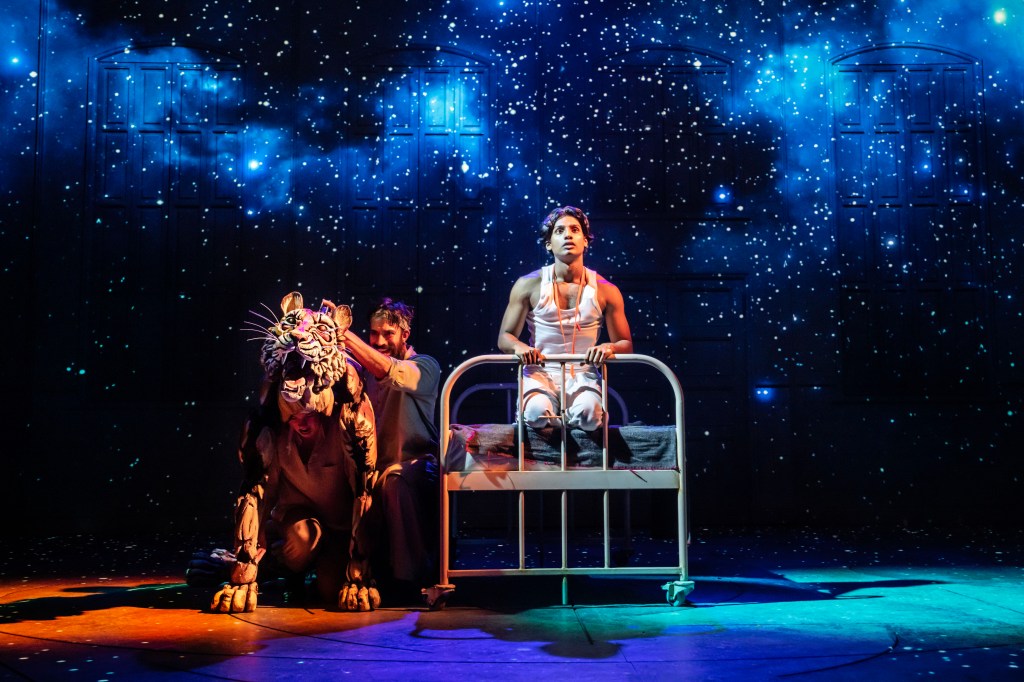
As all good art does, we’re taken out of ourselves – out of the to-do list of our 9-5 lives and into another world.
I know. I sound like I’m getting carried away. But, do you know what? For those two hours, or so,I was.
But what of the animals? I’m getting there.
First, I’d like to talk about Pi. Now the first performance of the production on Tuesday was cancelled, due to cast illness. Last night we were advised that the role of Pi, due to be played by Divesh Subaskaran (nb included in production images) would instead be taken by female actor, Tanvi Virmani.
Best wishes to Divesh. I don’t know the circumstances surrounding how long Tanvi had to prepare for her performance but it was incredible. The energy she brought to the stage physically and in her passionate depiction of the lead role, was impressive and successful in having you immediately invested in the character.
However, sharing a stage with those spell-binding, wondrous puppets (it feels almost disrespectful and demeaning to describe them as such!), was no mean feat.
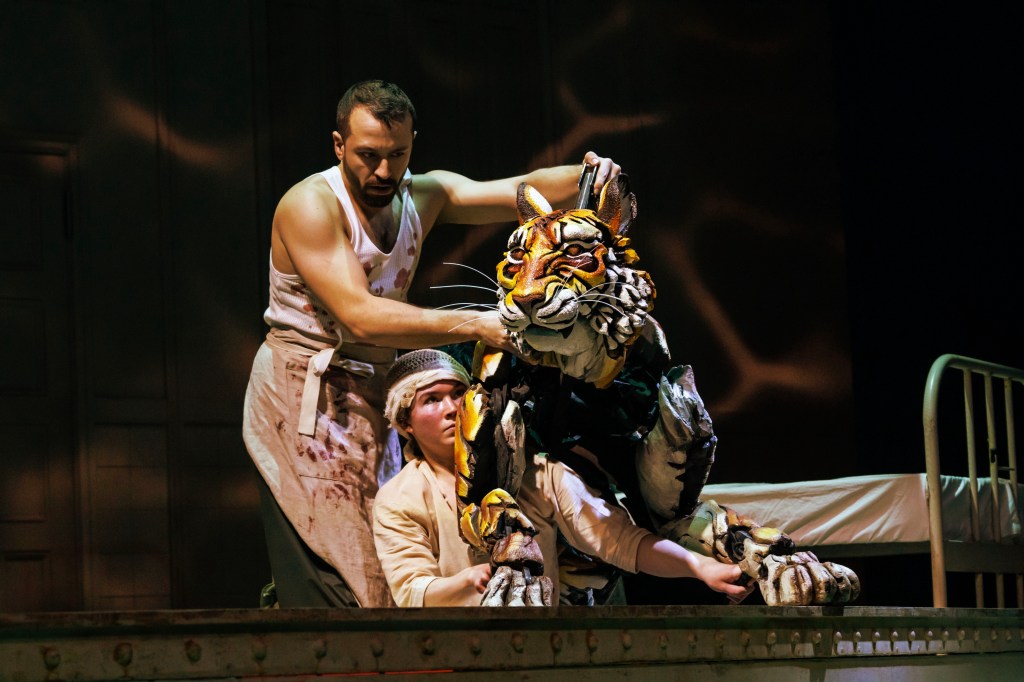
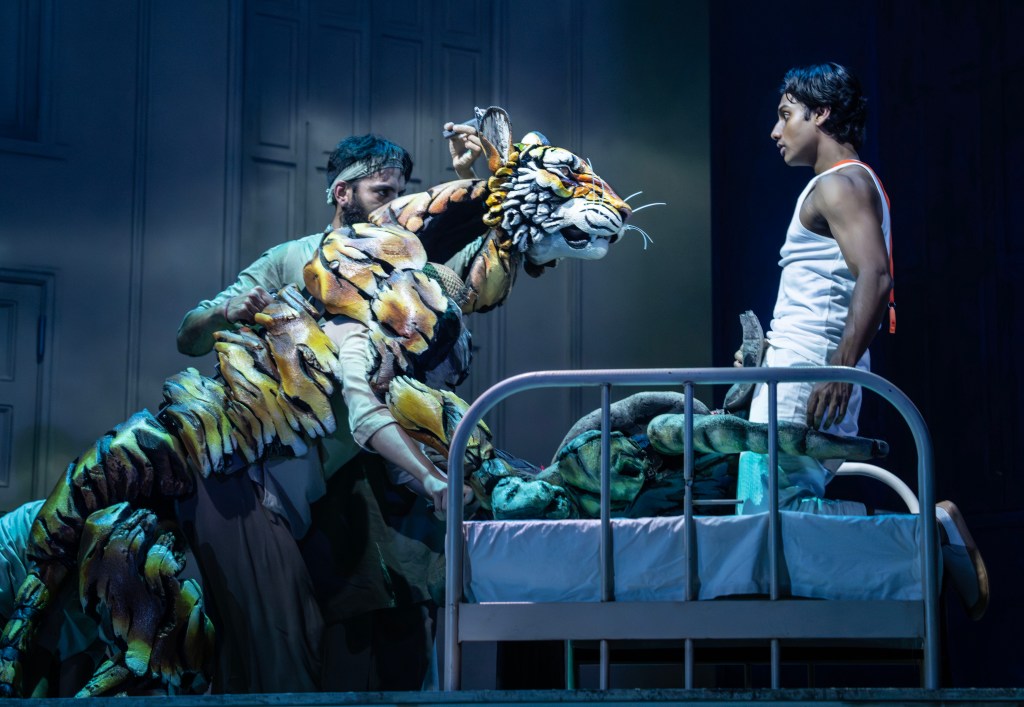
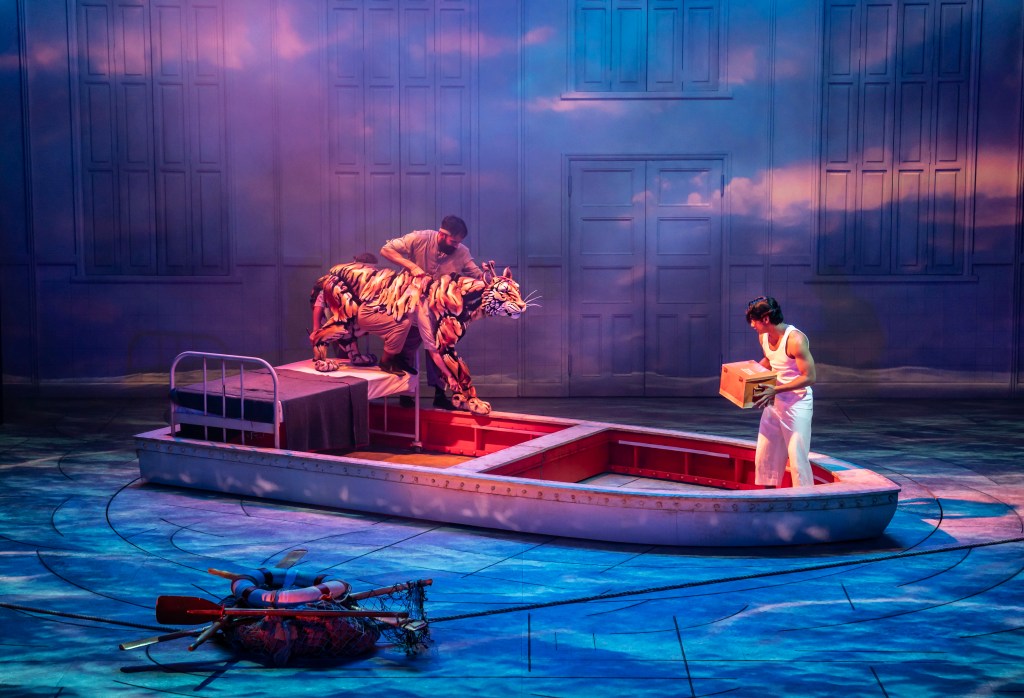
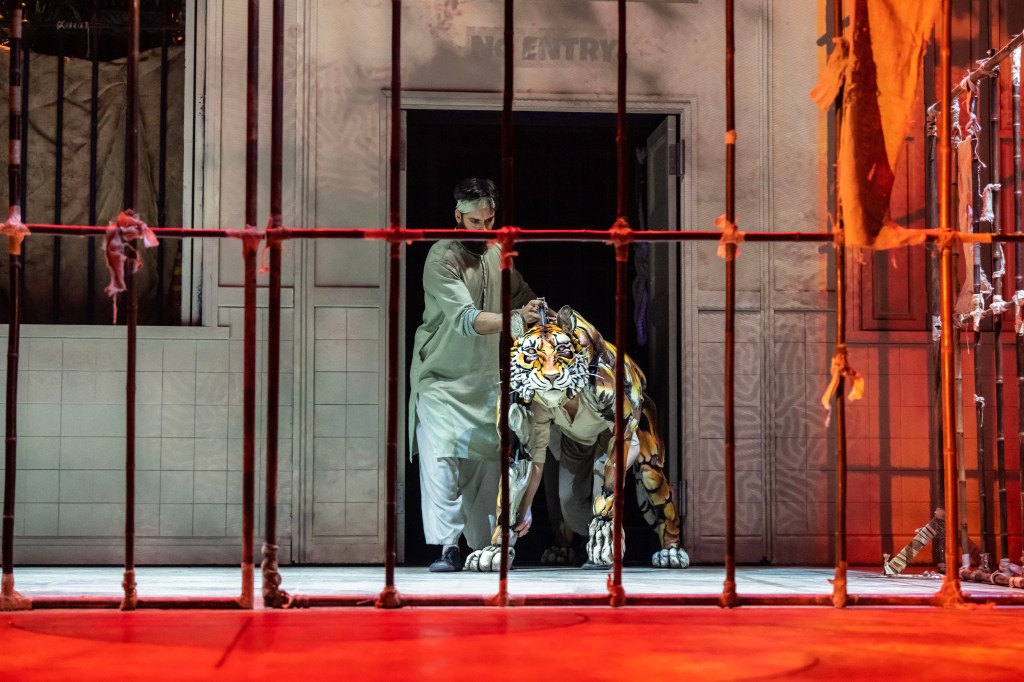
As with War Horse, such is the technical artistry, the puppeteers are literally immersed in their creations. The attention to detail not only in the craftsmanship (designers Nick Barnes and Finn Caldwell), but in the physical inflections and characteristics of each animal too,, was incredible..
Together, they became the hyena, the zebra, the orangutan, the Royal Bengal tiger.
Which did not, I might add, do anything for my despair and trauma when matters became all too dark and real (trigger warnings included murder, death and animal cruelty – buckle up…).
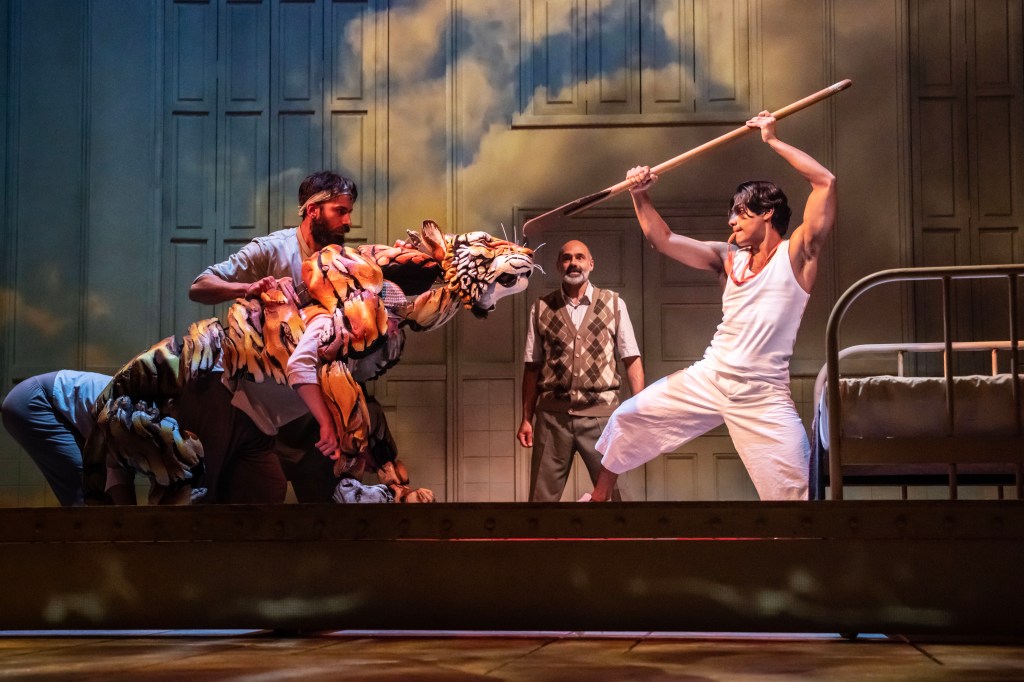
But Richard Parker, Richard Parker. An administrative misunderstanding led to the tiger being named Richard Parker, when arriving at the zoo in early scenes.
And was wondrously addressed as such, and never not full-named, by Pi throughout.
Richard Parker. And I thought calling my cat Bryan was irreverent.
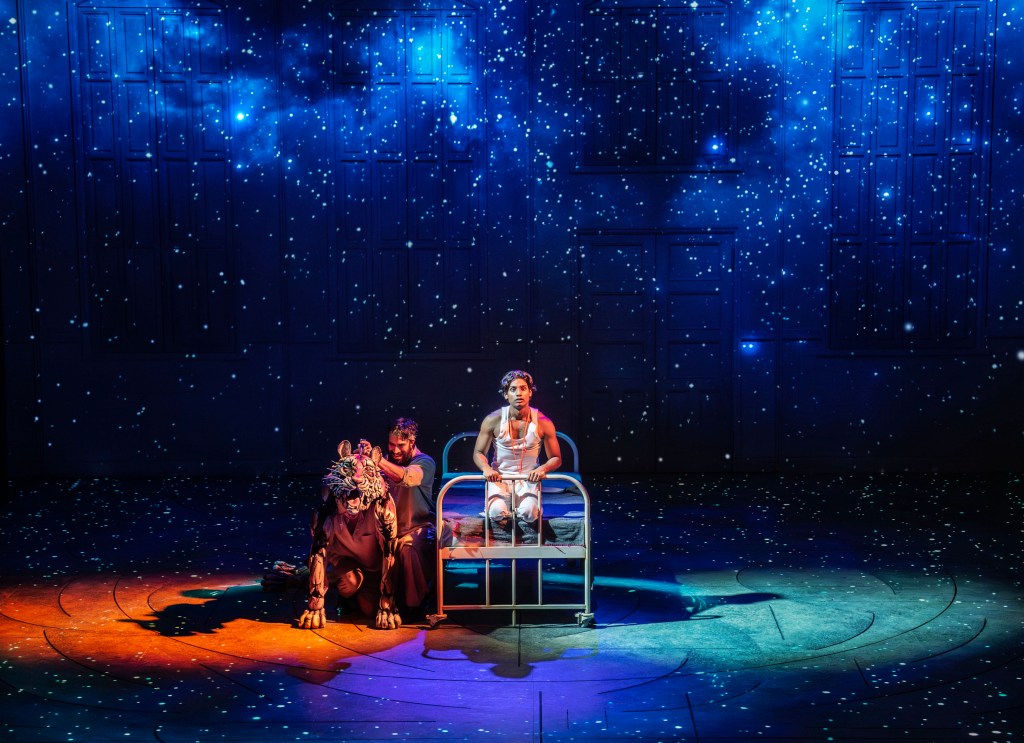
And so, as the theatre filled with stars last night, my emotional resilience that bit more developed, I think we all left The Lowry with much to think about but, most of all, happy recipients of a great evening of entertainment.
Run don’t walk – tickets and more information can be found at https://thelowry.com/whats-on/life-of-pi/.
Life of Pi is on at The Lowry until 7 January 2024.
For details of all cast and creatives, visit https://lifeofpionstage.com/
Right, Alexa play ‘Bright Eyes’…(just kidding, I’m nowhere near ready for that).

 honorary manc
Leave a comment