If something comes to under the banner of ‘winner of the Shelagh Delaney new writing award’, you know that it has to be something special.

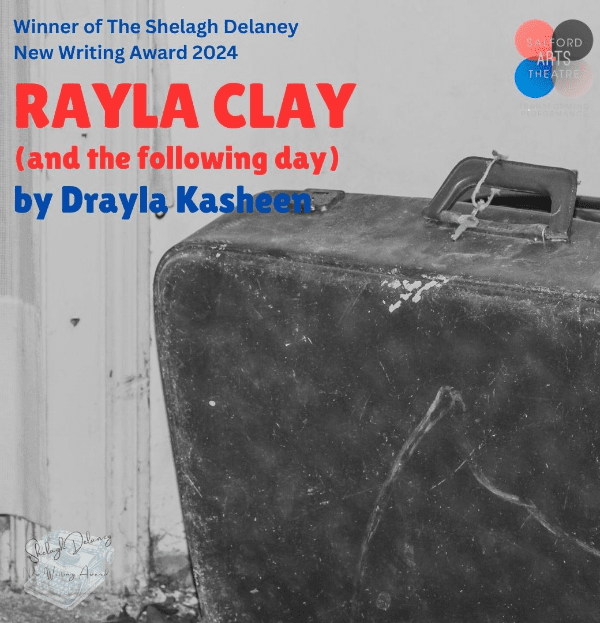


Rayla Clay (and the following day), written by Drayla Kasheen, and directed by Roni Ellis, is something special.
I have to remind myself that this is new writing, which has to mean there will be more. Lucky. Us.
A rite of passage drama about broken promises, squandered opportunities, innocence versus experience: the love-hate continuum that exists between a father and daughter – where the Past-Present-Future exist in the same time and place.
Teenage Rayla (single-handedly props up her emotionally abusive, addicted, highly intelligent father.
On one life-changing day, her world undergoes a seismic shift under the influence of an unexpected apparition – her older self, Ray – where the father and daughter(s) fight for control of his inability to change.
What follows is a charged, brutally honest battle of wits about Hope vs Despair – where the child becomes an adult, and the adult a child.
And it’s desperately sad. You hear propositions like – ‘what would you tell your teenage self’, etc. but seeing this played out, seeing the 13 year old Rayla (Blu Blackburn), timid but hopeful, sad, but still keeping the faith – then the older Rayla, ‘Ray’ (Jenny Jordan O’Neill) – angry. Angry and disillusioned and drinking. The father/daughter relationship eroded, rage taking the place of long since left respect. It hits more deeply.

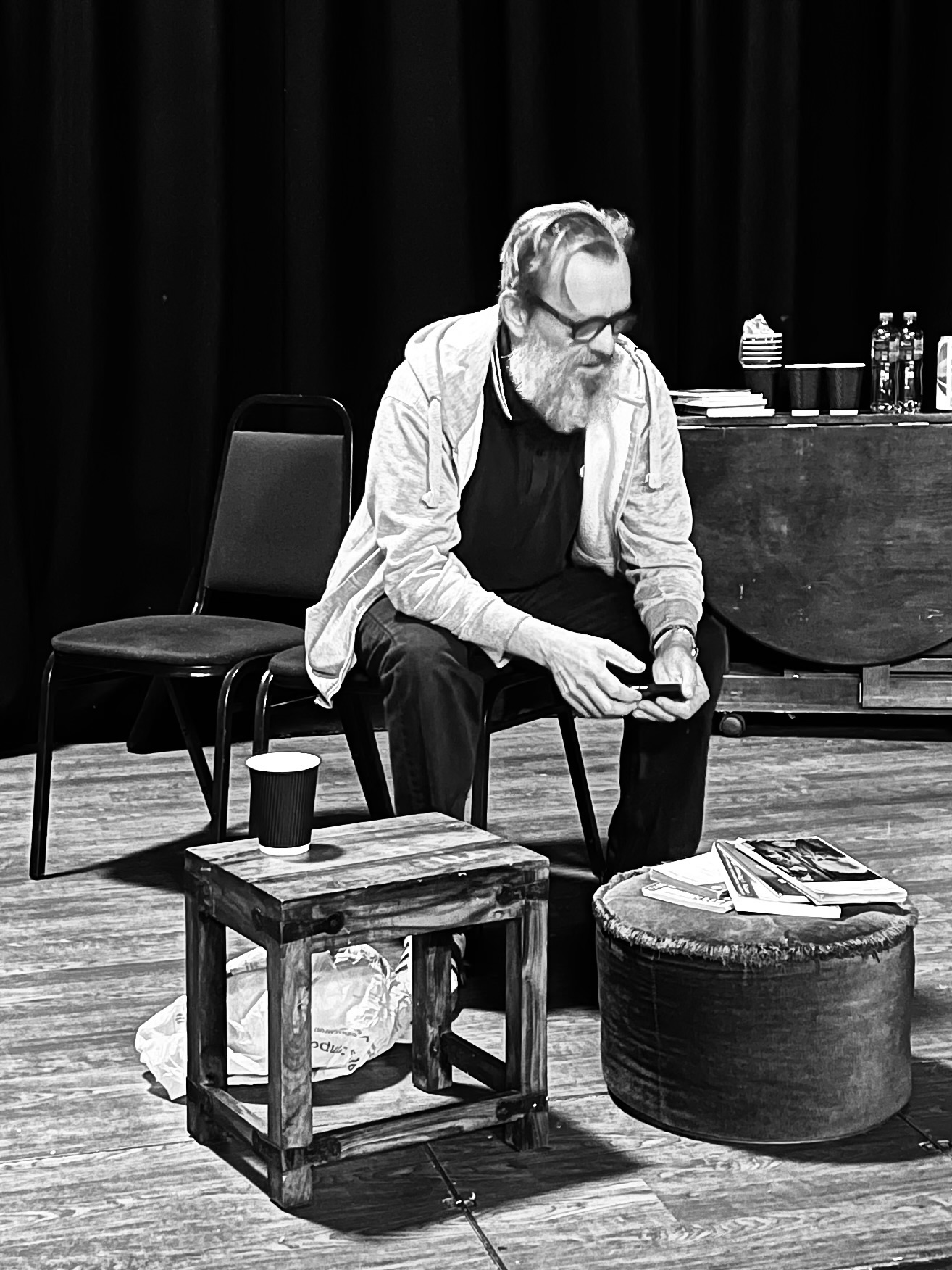
So let’s talk about the father (Scott T Berry). A seemingly high-functioning alcoholic. Well no, that’s not entirely accurate. More highly intelligent but the functionality has seemingly waned. Waking up off the floor after another night’s heavy drinking, he dresses for another day at the job centre which we learn is fruitless thus far, and draws deep suspicions of self-sabotage.
Meanwhile, always deflecting throughout his conversations with an emotionally -burdened Rayla, peppering speech with philosopher’s quotes and encouraging the young girl to do the same.
As future becomes present, and present becomes past, a change in focus is heralded by a ‘glitch’ effect (flickering of the lights, buzz of electricity), and whilst the concept may sound confusing, the execution is well done.
As the young Rayla sits passively dejected as the father’s day is once again futile, an angry older Ray confronts an older, more embittered father. Nothing has changed in his world but Ray’s is one of fury, resentment, betrayal and now drink.
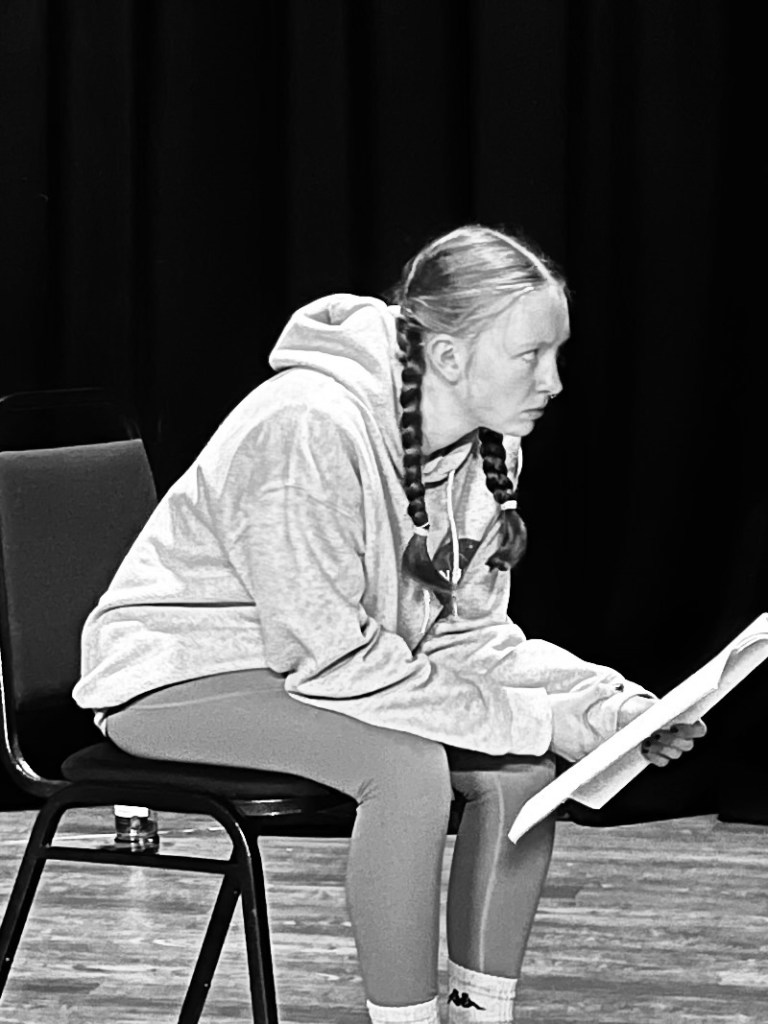
And as the father loves a good quotation, let’s paraphrase the biblical phrase, ‘the sins of the father will be visited upon the son.’ Now I’m playing with the meaning slightly but there are more than echoes here.
Competing only with the rich, beautiful dialogue of this layered and meaningful piece, is the talent of the actors on stage. The performances are powerful, they draw you into their world, and there is immediate buy-in to what they’re putting out there. I cared and I felt something.

Shelagh Delaney’s arguably most famous play, A Taste of Honey, presents flawed characters, parental-chlid conflict and pain inflicted by those most close to you. Nobody starts off established, everyone at the beginning is new at their craft. But there are some writers and texts which feel more established than others, and Rayla Clay (and the following day) is a play that feels as embedded and classic as those which have run repeatedly for years.
I look forward with relish to seeing more of Drayla Kasheen’s work.
Visit https://www.salfordartstheatre.com/ which is, indeed, a hidden gem, for future productions and more information about the home of Salford Theatre Company.
 honorary manc
Leave a comment