No shame, long-time lover of this classic piece here. That had potential for issues. I’m so in love with it, can I possibly see anyone else in the roles? Will it bring with it, an interpretation that I’m blind to the benefits of because I love the televised Play for Today 1977 version so terribly much?
Abigail’s Party is first and foremost a play that was televised. It’s a play at heart. And as much as my (and the majority) of fans’ first exposure to it was as this televised production, what we’re getting in this production is pure and as nature (and writer Mike Leigh) truly intended. Indeed as Leigh says about the BBC version,
The first thing I’d say is, this is not a film. And not only that: for a film-maker it’s a work of deep embarrassment and pain. There is no piece of work for which I have been responsible as director by which I’m embarrassed, apart from Abigail’s Party. Not for the play of its content […] It is a stage play that was wheeled in to a television studio.
And whilst it’s understandable that some of us all cling so dearly onto the ‘stage play that was wheeled in to a television studio’, to see the story in its natural habitat is something to be jumped at. The only gripe I ever had was the distance often felt from the action – I wanted to be at that terrible gathering at Beverley and Laurence’s. I wanted to be offered a gin and tonic? Ice and lemon?


Well last night I was.
At the height of 1970s suburbia, social class and ambition, Beverly Moss, the Hostess with the Mostess, is inviting you to her cocktail party. The latest tracks are on the record player, the drinks are flowing and there’s even a bowl of olives – although it seems that only Laurence likes those. As the night moves on and the party gets thick with sexual tension, Beverly’s exclusive gathering quickly descends into chaos.
Directed by Natalie Abrahami, for the first time Abigail’s Party became truly three-dimensional to me and I was right in the thick of the action. I was feeling second-hand embarrassment at Beverley (Kym Marsh) giving Laurence (Graeme Hawley) both instructions and a humiliating dressing down, at Beverley mauling mono-syllabic Tony (Kyle Rowe), at ‘Ange’ (Yasmin Taheri) being berated and shut down by her husband, at Susan growing increasingly anxious (and sick) about her teenager, Abigail, throwing a party just down the street…
I was there for it all and I loved it!
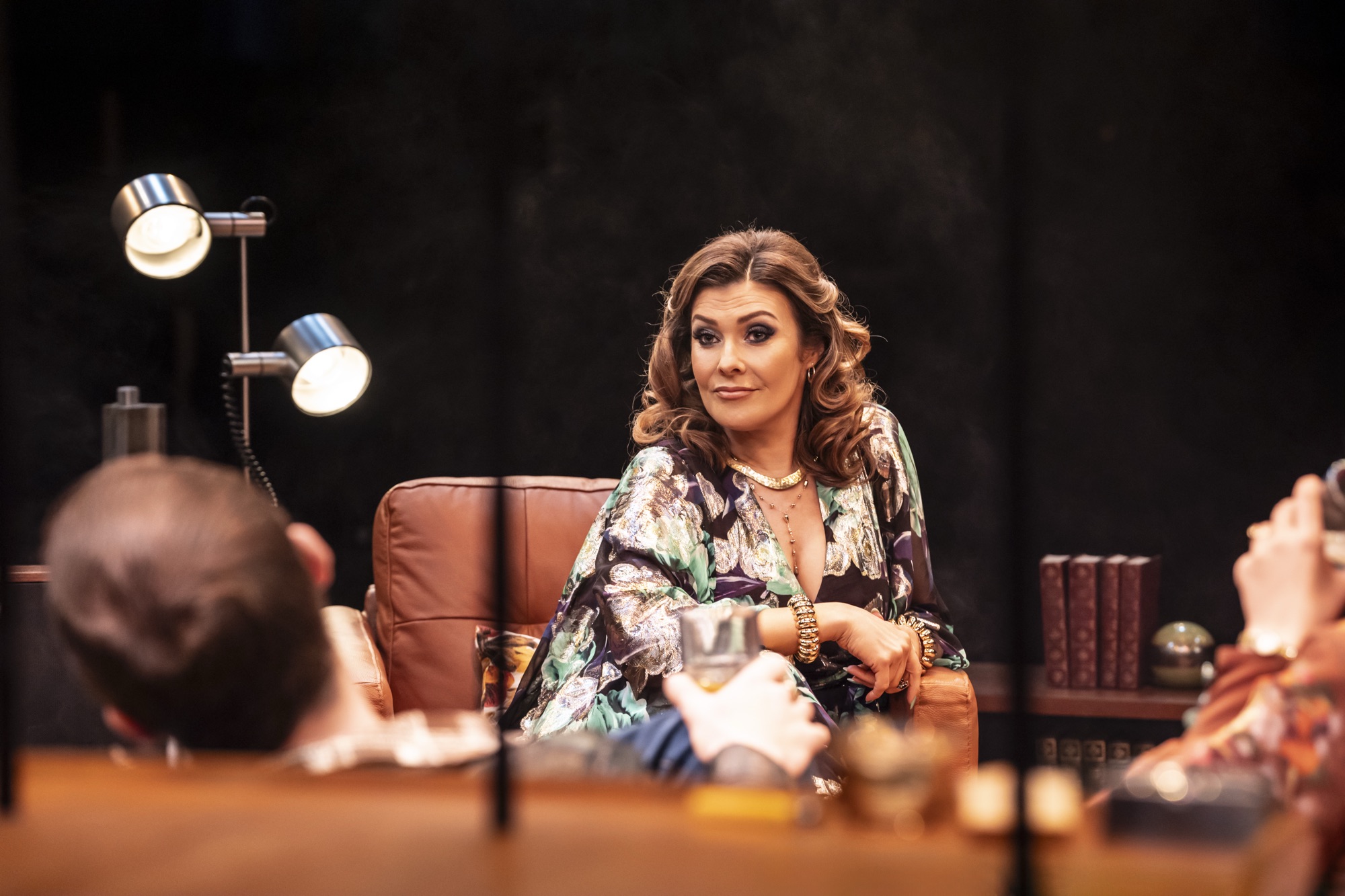
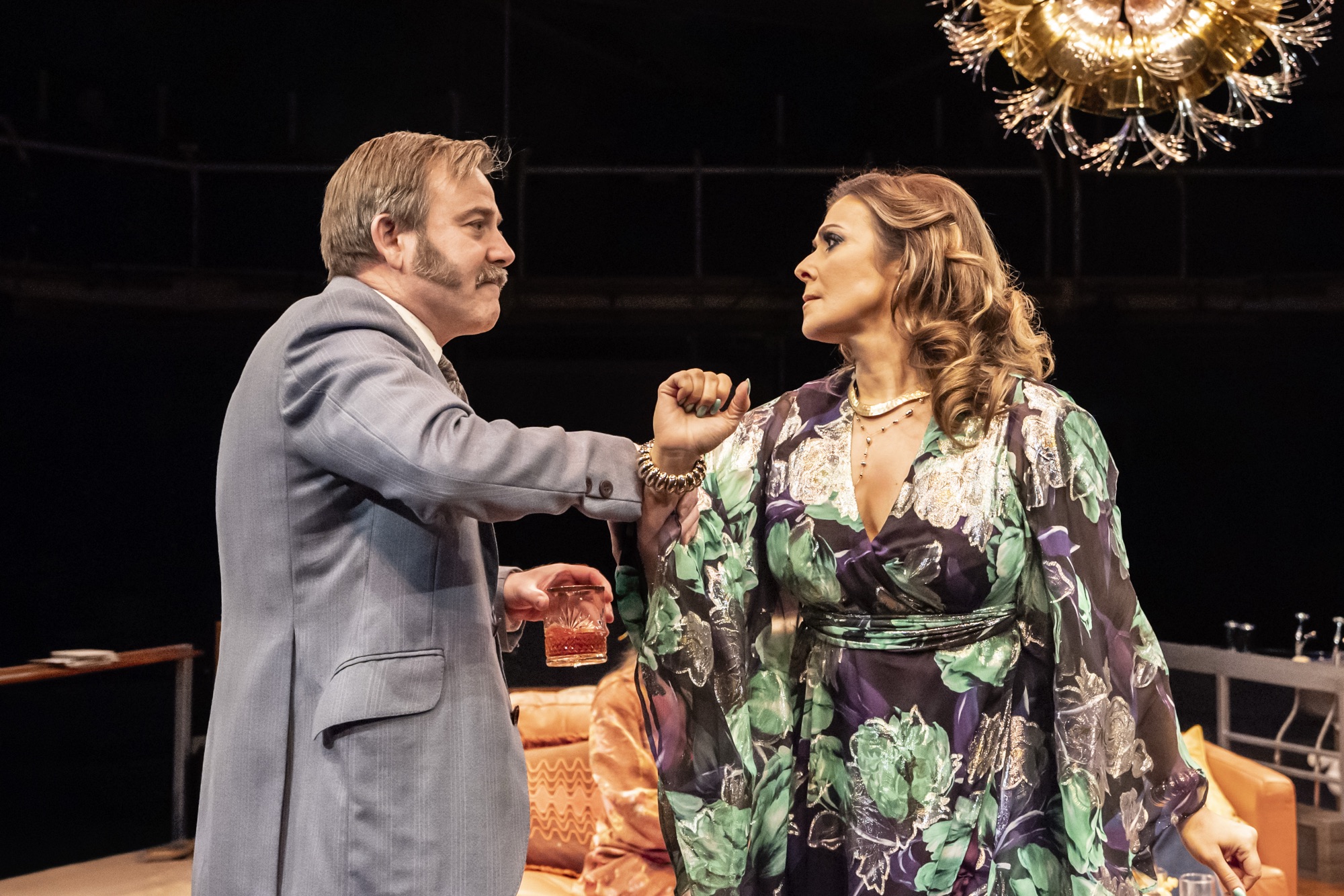

Whilst it brought its own riffs and tweaked localised dialogue and accents (as it rightly should), for one character it was shut your eyes and it was Tim Stern in that 1977 stage play wheeled into a television studio. Open your eyes and it was Graeme Hawley from the mannerisms to the facial expressions, to the walk that I didn’t realise I knew so well.


Kym Marsh brought her own Beverley to the table, the character growing increasingly and deliciously appalling with every drink downed and we were there for it. Kyle Rowe brought mancunian and sinister undertones to the terrible Tony, Yasmin Taheri brought the same feelings of joy coupled with concern as the innocent, eager to please Angela and Tupele was a revelation as a less timid, fairly still straight, but less anxious Sue, who was whilst still essentially a hostage to Beverley’s gathering and ways, subtly more knowing and in command, as she weathered jibe and comment on her divorce and exposure to racial slurs.
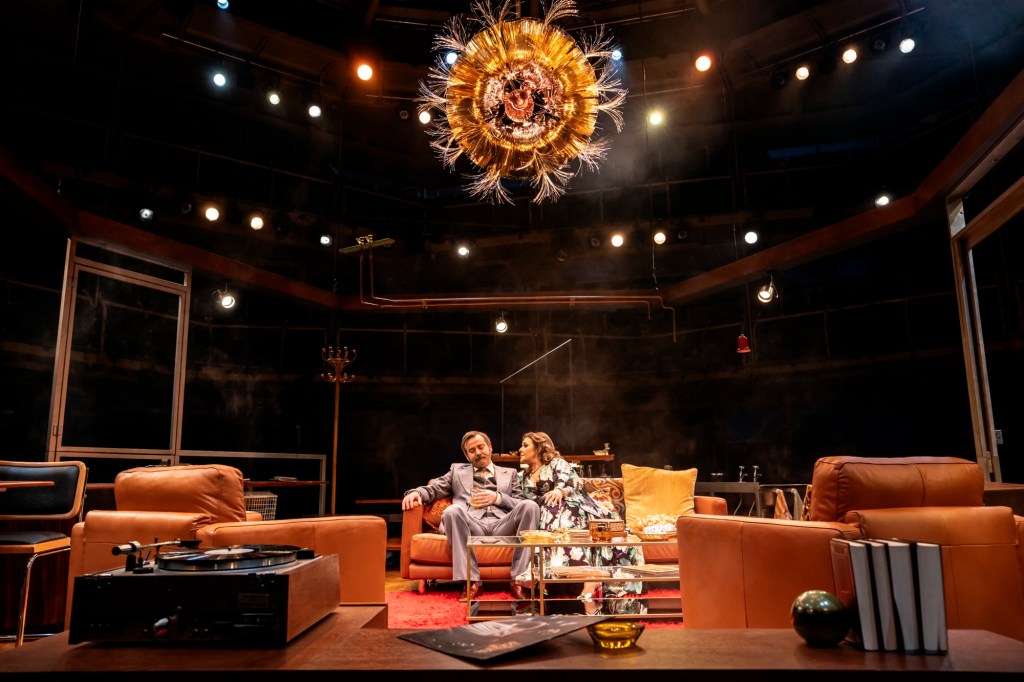
And to the set and production itself. I’ll never tire of banging on about the delights of the ‘in the round’ concept of the theatre, and the opportunities that presents for both creativity and engagement with the audience that brings to plays.
Occasionally rotating to provide the audience with variation of the individual member’s eye view, to increase tension as the play journeyed towards its dark climax, to provide equal opportunity for us to watch Beverley applying her make-up sat on the toilet…For two hours, we were all in that deliciously decorated 70s suburban home.

And with me letting out a barely audible (but still audible) cheer when Demis Roussos made a late appearance (fun fact, at first when everyone was asked whether they liked Jose Feliciano instead, and Elvis joined the party later on, I thought there may be an issue with the rights for Roussos and Tom Jones – I have since learned that instead these were the original gods and all round musical legends whose records were featured in the stage play; Roussos and Jones making an appearance in the televised version for copyright reasons.
So you see, us heathens who are wedded to Alison Steadman et al’s version, have never really seen Abigail’s Party at all. And while there’s a place for both versions, you really should go and immerse yourself in this one before the party’s over.
Abigail’s Party is at the Royal Exchange Theatre Manchester, until 24 May 2025 – visit https://www.royalexchange.co.uk/event/abigails-party/
 honorary manc
Leave a comment