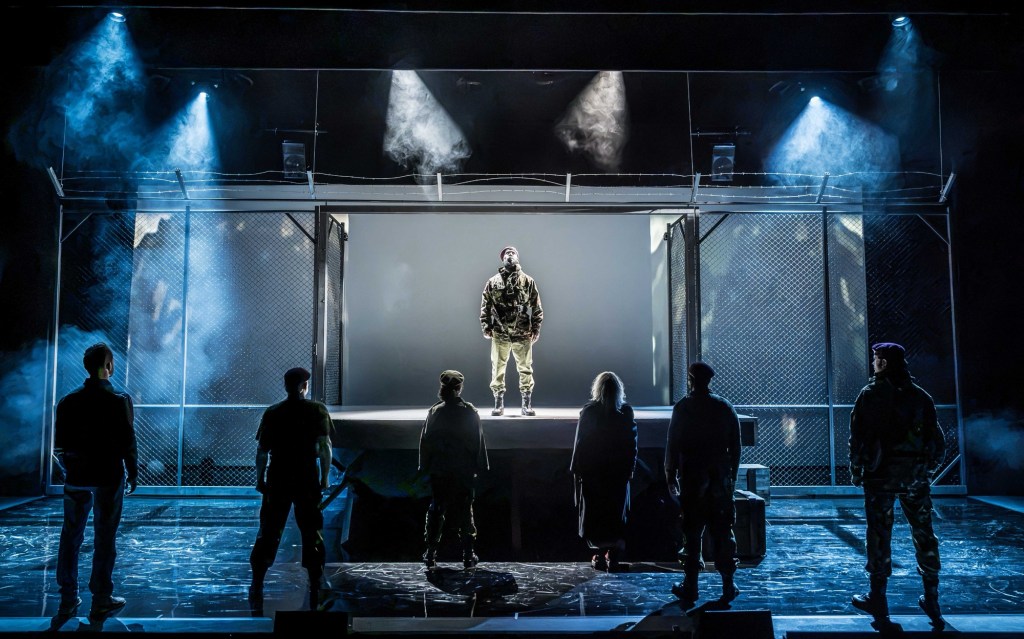
A secret marriage. The brink of war. Fact and fiction
Fear, passion and paranoia bubble beneath the surface of Othello and Desdemona’s newlywed life.
Lago’s manipulations begin in whispers – and end in ruin.
As a consumer, theatre-goer, audience-member, I’ve rather a lot of Shakespeare in the bank at this point. Some traditional in word and setting, some contemporary in one and not the other, some contemporary in both parts. And I’m all the richer for all approaches as each can add a layer of appreciation and even deeper understanding in some ways to the original text.
This production of Othello at HOME is traditional in speech, contemporary in backdrop (well comparatively – it’s set 40-odd years ago as opposed to 450-odd years ago. Then set against the Fourth Ottoman-Venetian war, this against the Falklands. Both at a military outpost where the drama and intensity of the battlefield comes a close second to that in the relationships between our main players.
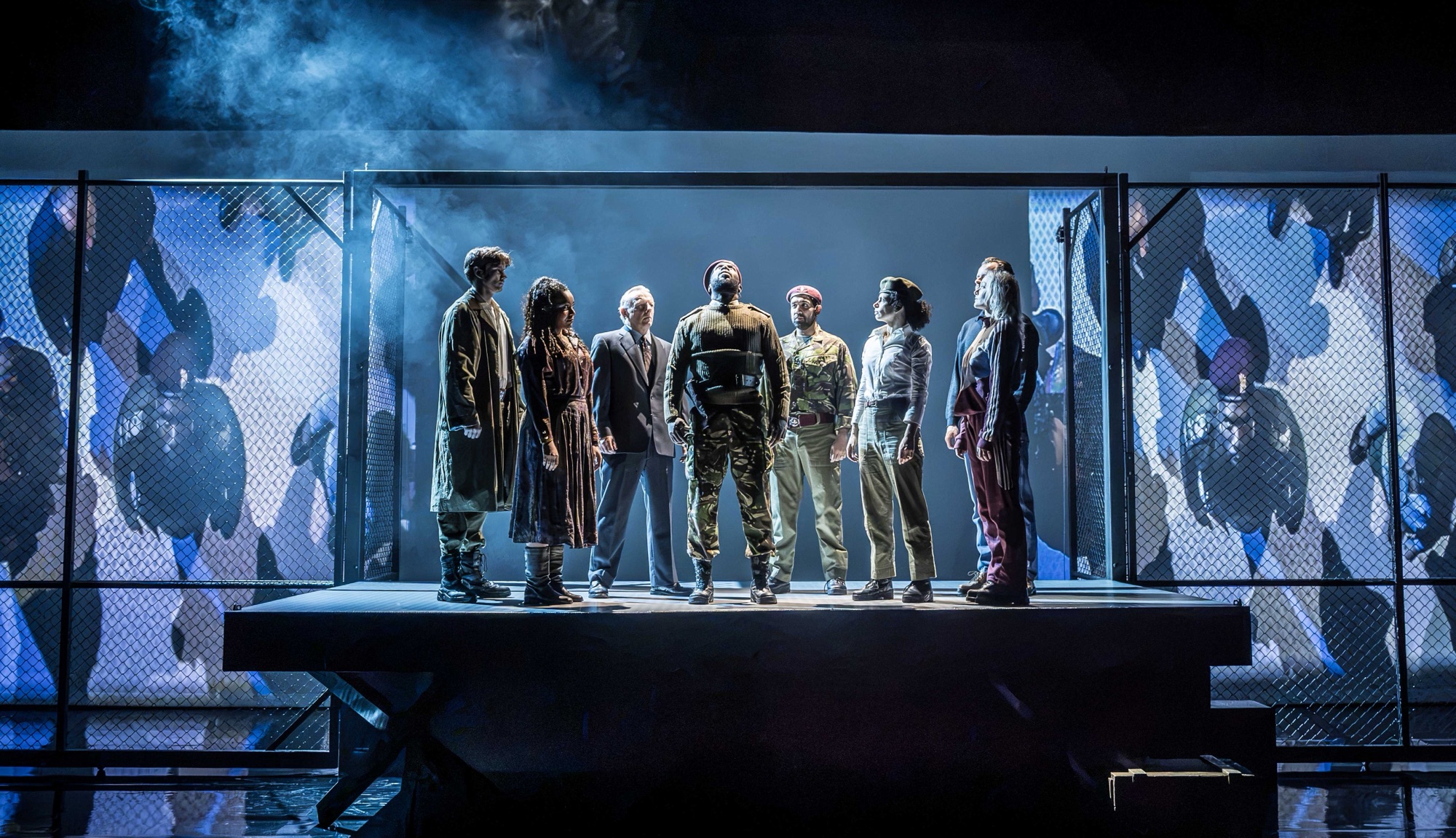
However, director Anthony Almeida points out in the programme notes that the setting in time isn’t just a device to shift matters into contemporary understanding:
Setting the play in Britain during the early 1980s wasn’t about making Shakespeare contemporary. It was about finding a society where appearance, professionalism and belonging carry enormous weight. I became less interested in public politics than private intimacy; less interested in certainty than perception. Four hundred years after Shakespeare wrote it, the questions at the heart of the play still feel astonishingly urgent. They’re questions about who we become when we believe we have to perform in order to be accepted – and what happens when those performances finally collapse.”
I genuinely think this production would have hit the spot no matter which era it was set. I think it’s always refreshing to experience a new approach to a text as it allows for creative input and experiment. For example, we had matters outside of the emotional battlefield, brought to us via ITN footage on an 80s television set, playing on a loop, and through wider projections.
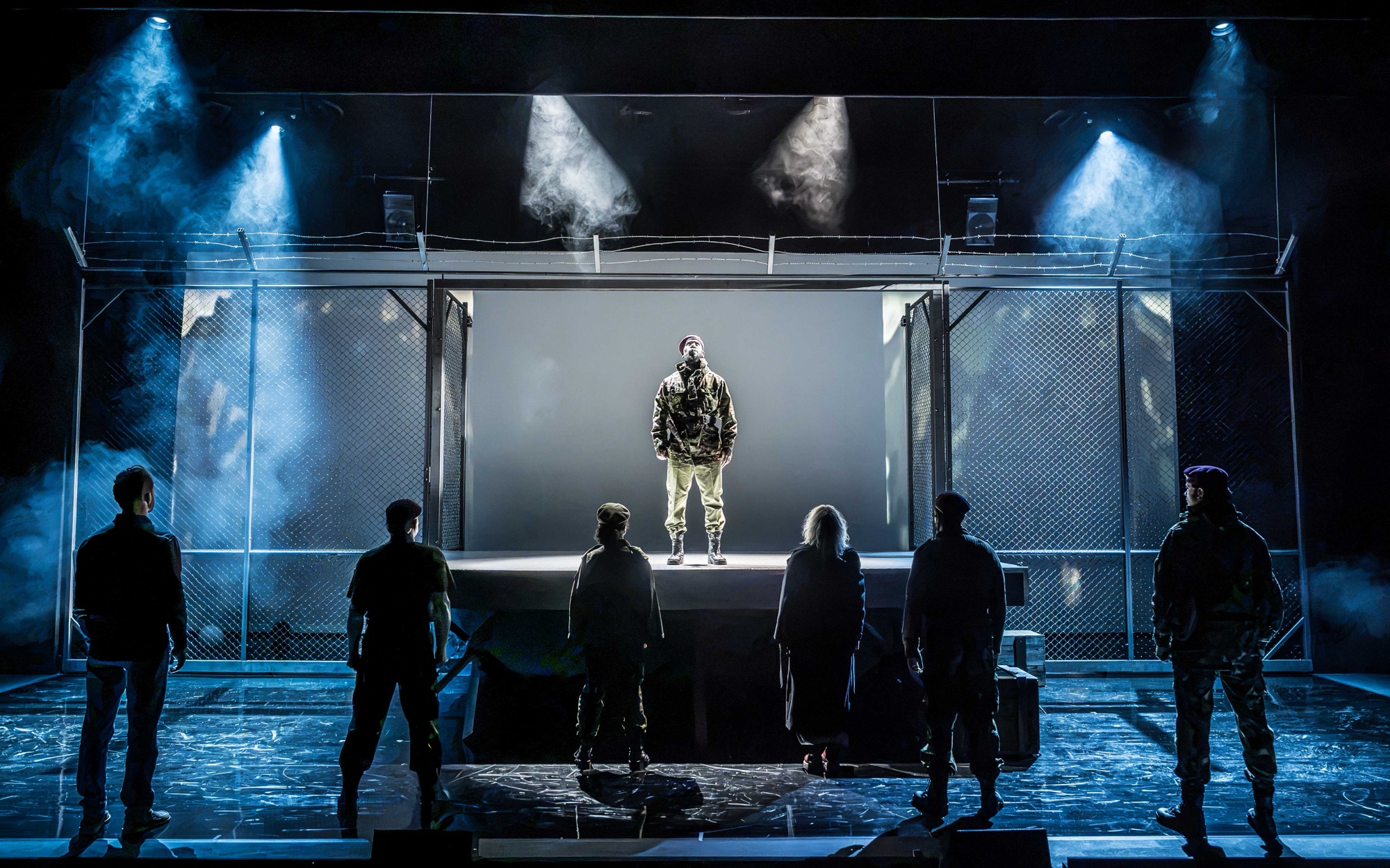
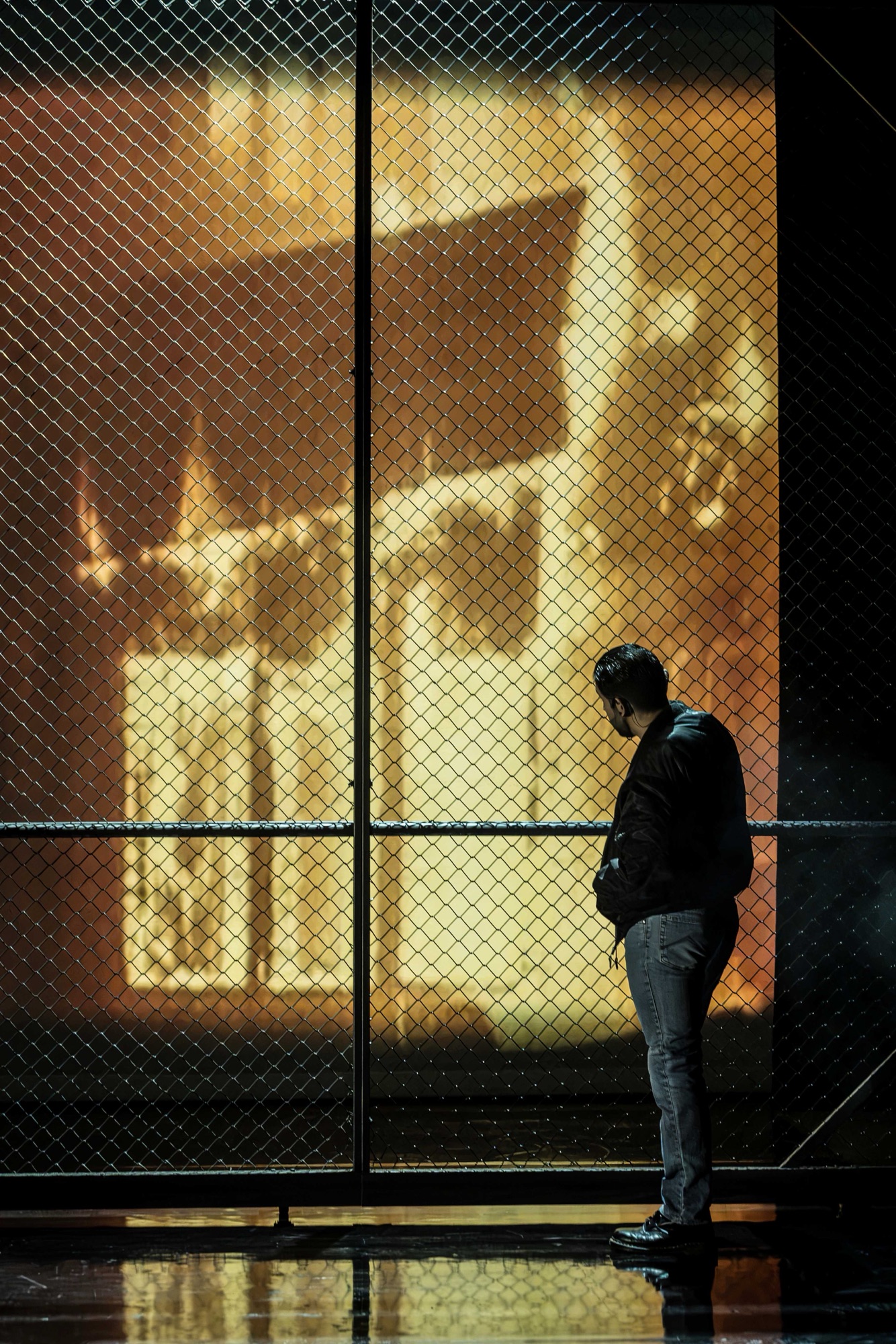
We had a handful of songs from the 80s, but at least within the context of the scenes experienced in real time by the characters (and so sparing me of a level of cringe that I’m partial to when musicals become very musically – this is a me-problem, acknowledged). To be clear this is not a musical and is not that. Othello (Dwayne Walcott) dancing to Come On Eileen was giving us all an unexpected moment however, and not one unwelcomed.
A nice touch was the casio (no pun intended, aficionados of Othello) type numbers and font projected on the backdrop to signpost to date, time and place).
A lesser production might have been tempted to go full-blown and extra with the 80s styling and costume for the characters, but this one resisted any temptation to go down this route. It was ‘man on the street’ fashions, Falklands military attire, with ‘ordinariness’ leading the way again keeping on the right side of what pertained to the era without straying into costume or parody.
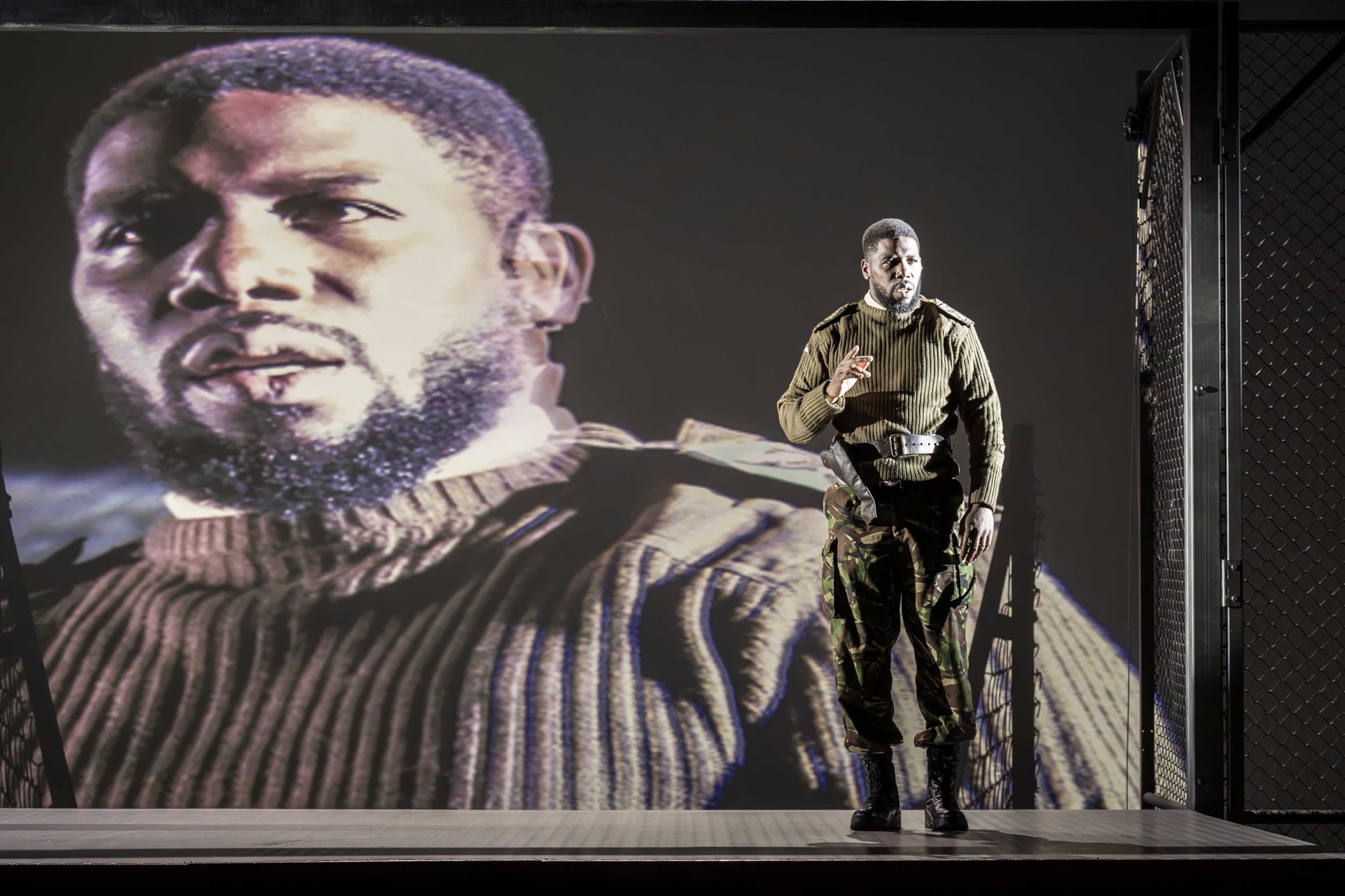
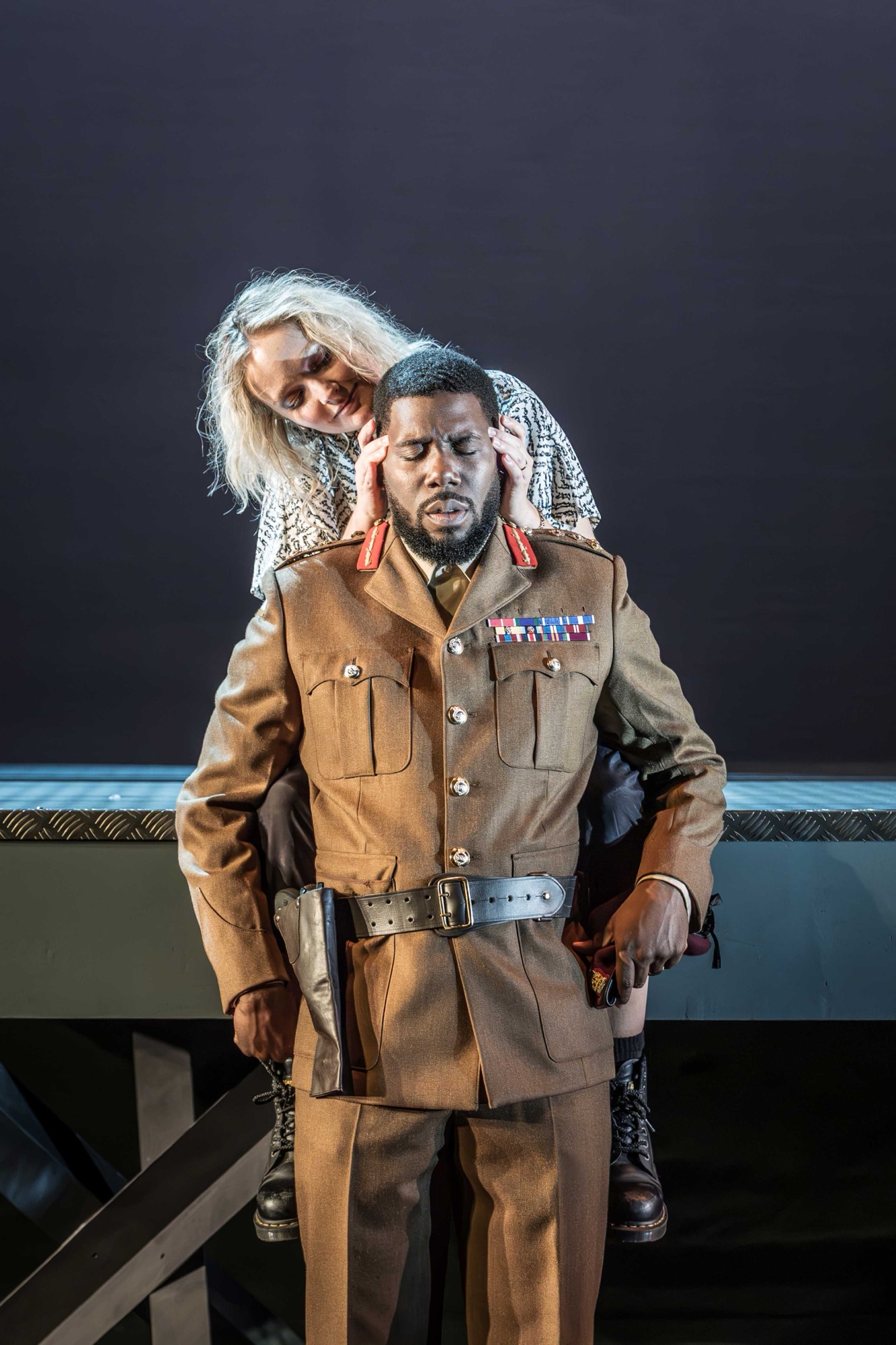
What this production has is bold, ‘clean’ devices that don’t detract from the dialogue which remains centre stage, as delivered to us by a stand-out cast of actors. For most of the production, a wired-walled platform provides a host for dancing, disharmony, deceit and monologues full of desperation and increasing chaos.
And as matters reach crisis-levels, it becomes a cage (one which, at one point, Phoebe Smyth as our Desdemona literally scales to enter the bedroom – some wonderful symbolism there as she essentially has to break in to regain entry into what was once a marital safe-space – bringing memories of me astride the top of the scramble net at primary school, frozen in fear, my fellow pupils below me now looking like ants. Yes, I also bring the drama).
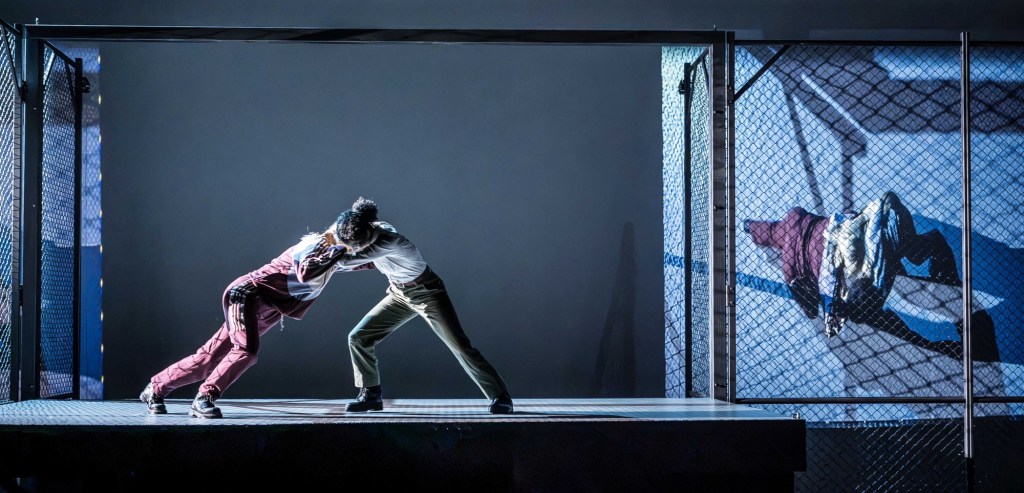
This stark, industrial set provided the perfect platform for the intensity felt by the unravelling of a love affair and devilish manipulation by our Iago (a brilliant performance throughout from Maanuv Thiara – it would have been gauche to boo every time he entered the stage but by ‘eck we would have been forgiven by the theatre gods).
So to return to my opening gambit, whereas some productions take a fluid approach to the traditional details of an original Shakespearian text in order to perhaps introduce relevance and understanding to a modern day audience, this performance by this cast could stand its ground no matter what the approach. That isn’t to say the approach wasn’t appreciated or enjoyed, more a compliment to the very essence of the production and its delivery of the core themes – ‘love, loyalty, race, class, gender and power.’
And a little acappella performance of Tears for Fears never did hurt anyone.
Othello, can be seen at HOME until Saturday 10 October before continuing a nationwide tour. For details and tickets, visit Othello — A secret marriage. The brink of war. Fact and fiction. | HOME
See the programme for full details of cast and crew.
Production images: Marc Brenner.


Leave a Reply