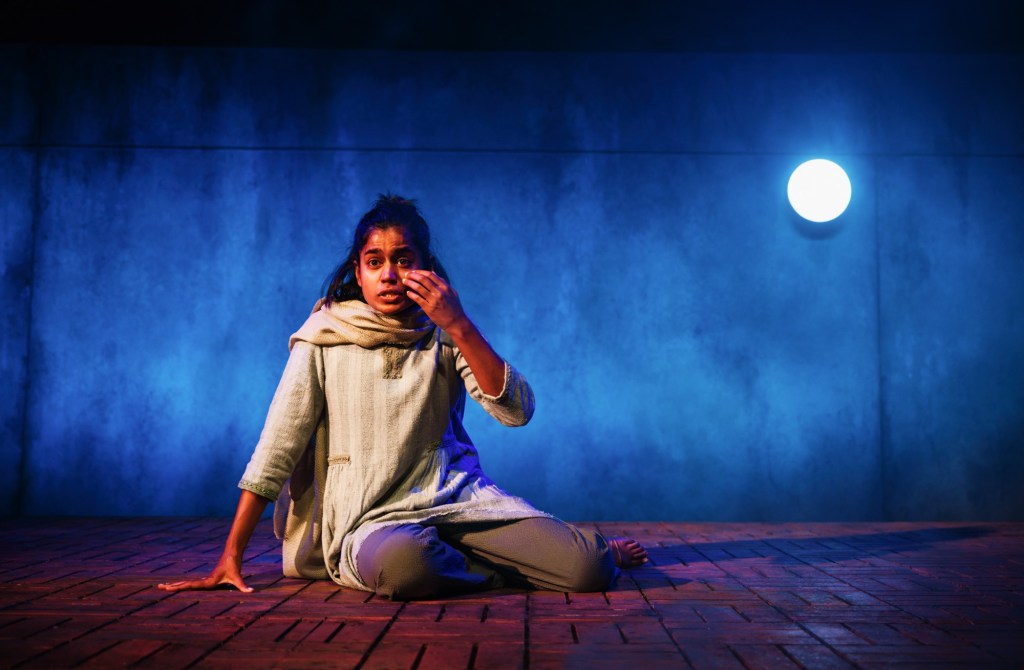
“I walk home. The skyline is changed.
The skeleton is fast becoming a huge metal creature.
They have built a behemoth here.”
Bhopal. India. 1984.
Born under a blue sky in a city of lakes, a girl grows up with her father and sister. The three of them together, always.
But as she grows, the land begins to change. A giant factory rises over her town. Her mother always wanted more for them – now the girl wants more too.
Then comes the night that tears everything apart.
I’m ‘fresh’ out of theatre 2 at HOME, Manchester. 15 minutes ago, and we all slowly shuffled out, somewhat shellshocked. A quiet, a very quiet, appreciation for what we’ve just seen. Ok, I’m speaking on behalf of others which I’m not sure I should. But I confidently will take the chance. And I really don’t think that any of this is down to confusion, derision, or any other negative of the isions.
And I also fail to mention, but on no account discount, the applause that followed the 90 minute performance. It felt muted but out of reverence and respect. So much that the whistles that rang out felt weirdly jarring but for which I was also grateful to for breaking the heaviness in the space.
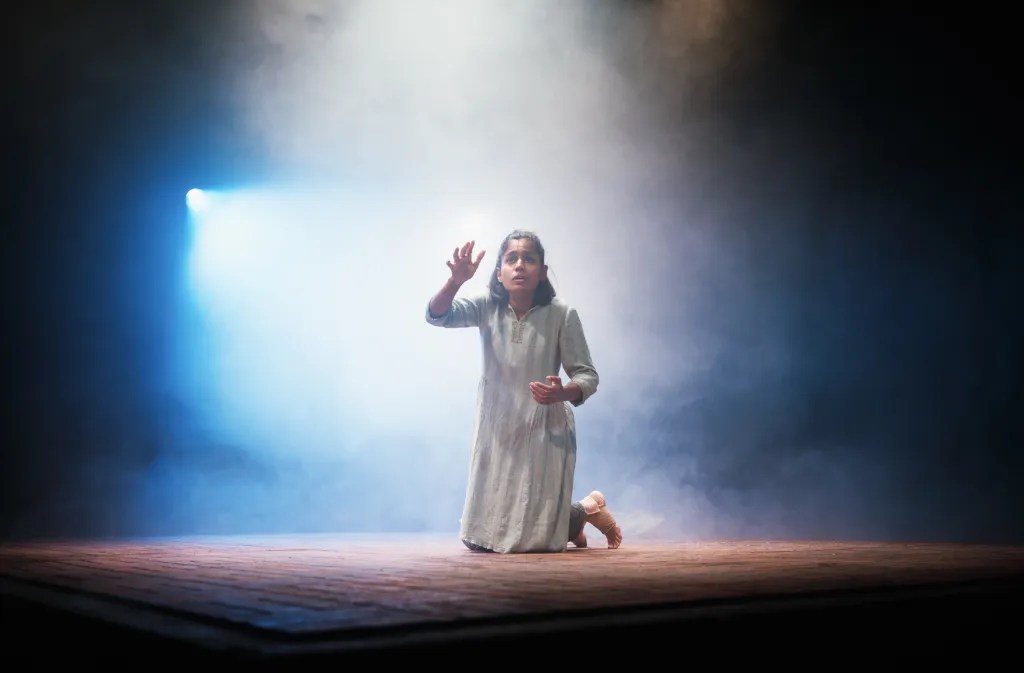
What I’m very clumsily trying to say is that this was an incredible piece of theatre that not only moved but I think stunned those in attendance.
Darkling is set against one of the most horrific tragedies of the 20th century (and Lord knows there have been a few); that of the Bhopal disaster.
And I’m going to lift directly from Wikipedia to provide the stark stats and details to provide an apologetically what might appear to be a whistlestop tour of the backdrop. I do this for brevity and efficiency whilst I process my thoughts, not for glibness or flippancy.
On 3 December 1984, over 500,000 people in the vicinity of the Union Carbide India Limited pesticide plant in Bhopal, Madhya Pradesh, India, were exposed to the highly toxic gas methyl isocyanate, in what is considered the world’s worst industrial disaster, as well as the largest chemical disaster in Indian history.
A government affidavit in 2006 stated that the leak caused approximately 558,125 injuries, including 38,478 temporary partial injuries and 3,900 severely and permanently disabling injuries. Estimates vary on the death toll, with the official number of immediate deaths being 2,259. Others estimate that 8,000 or more died from gas-related diseases.
And this isn’t even the full extent.
Such is the world that it’s so, so difficult to avoid being desensitised to facts, figures from the numerous citations at our fingertips which point to tragedy both historic and indeed often in the moment.
What art and theatre can do is crash through the reference materials and drive home the heart and humanity behind the stats of a moment in history that can terribly but seemingly be easily filed away in the archives.
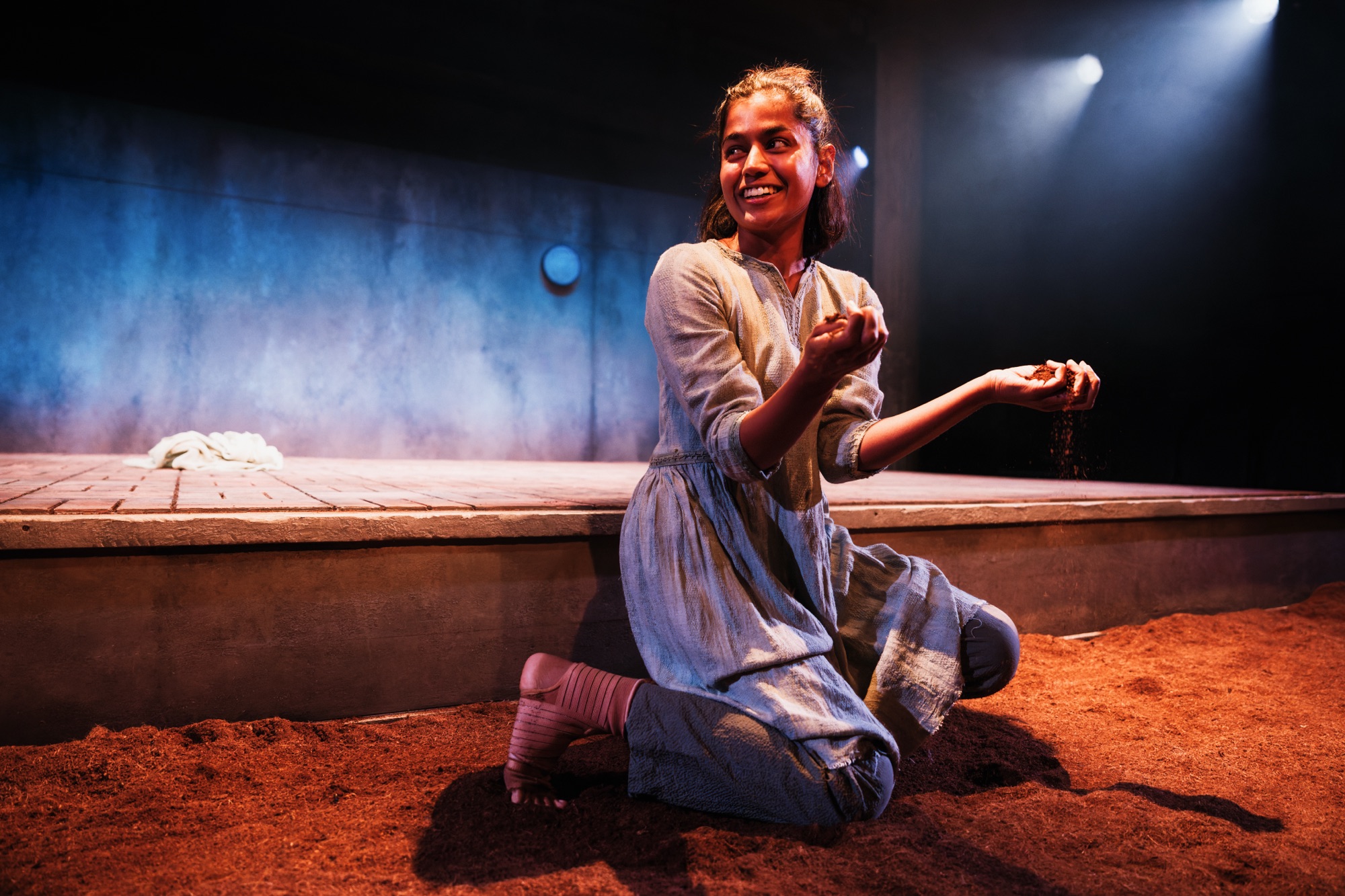

Eat, play and put my hands in the mud
This is a quote from the play, from the young ‘she’ (Linnea Berthelsen).
This is how she sees her ideal life and there is something wonderfully naïve yet magical about this. And on so many levels remains relatable, no matter your age. These three sentiments too give me pleasure (perhaps the latter in a more metaphorical sense), but basic, simple pleasure.
And are all the more devastating as we see over the first hour of the performance, as it traverses elements of life which are chipping away bit by bit at this plan. Exhibit A – the closeness and camaraderie between her and her elder sister we hear described, soon fractured the moment the latter’s innocence is so cruelly taken away from her by her abuser.
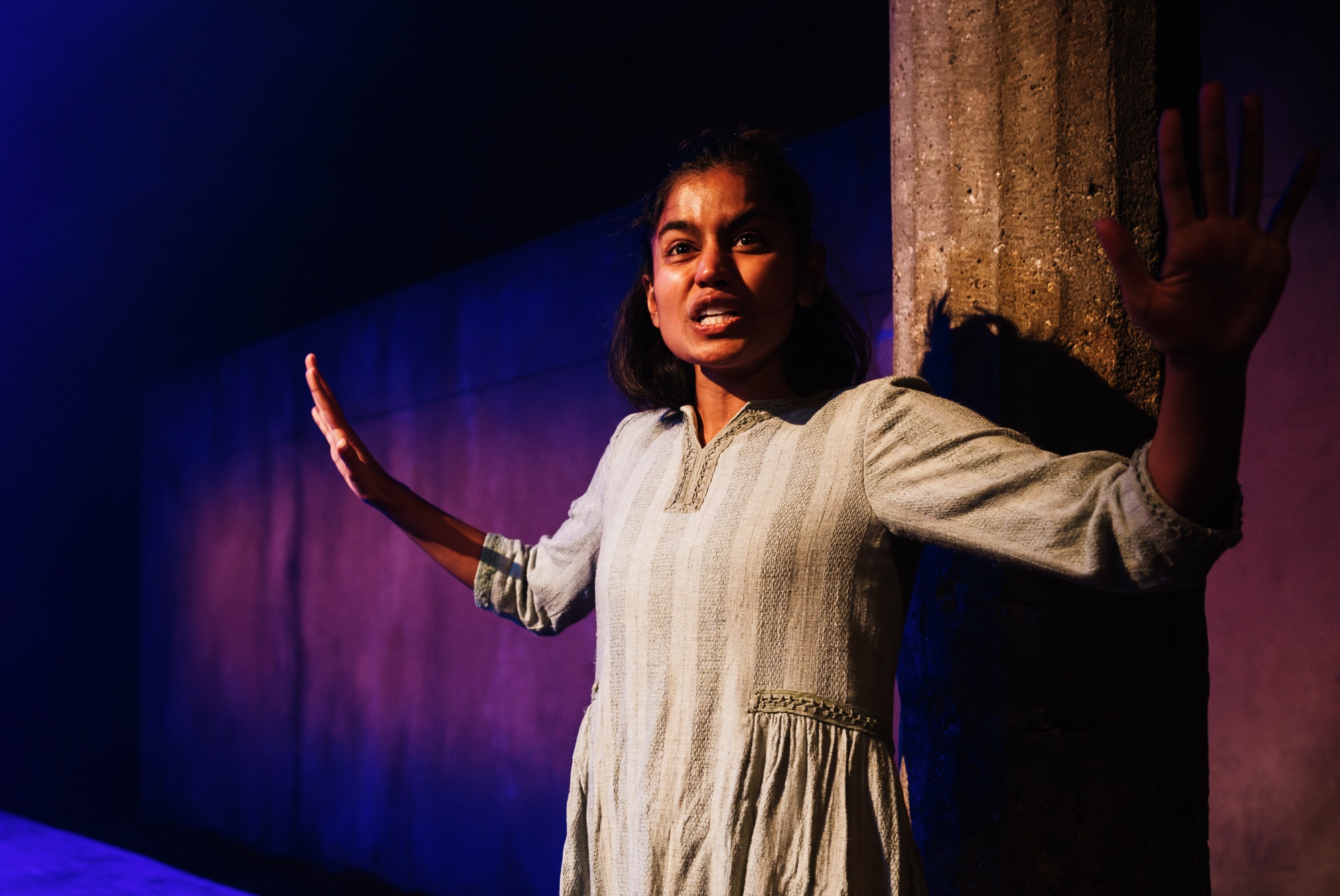

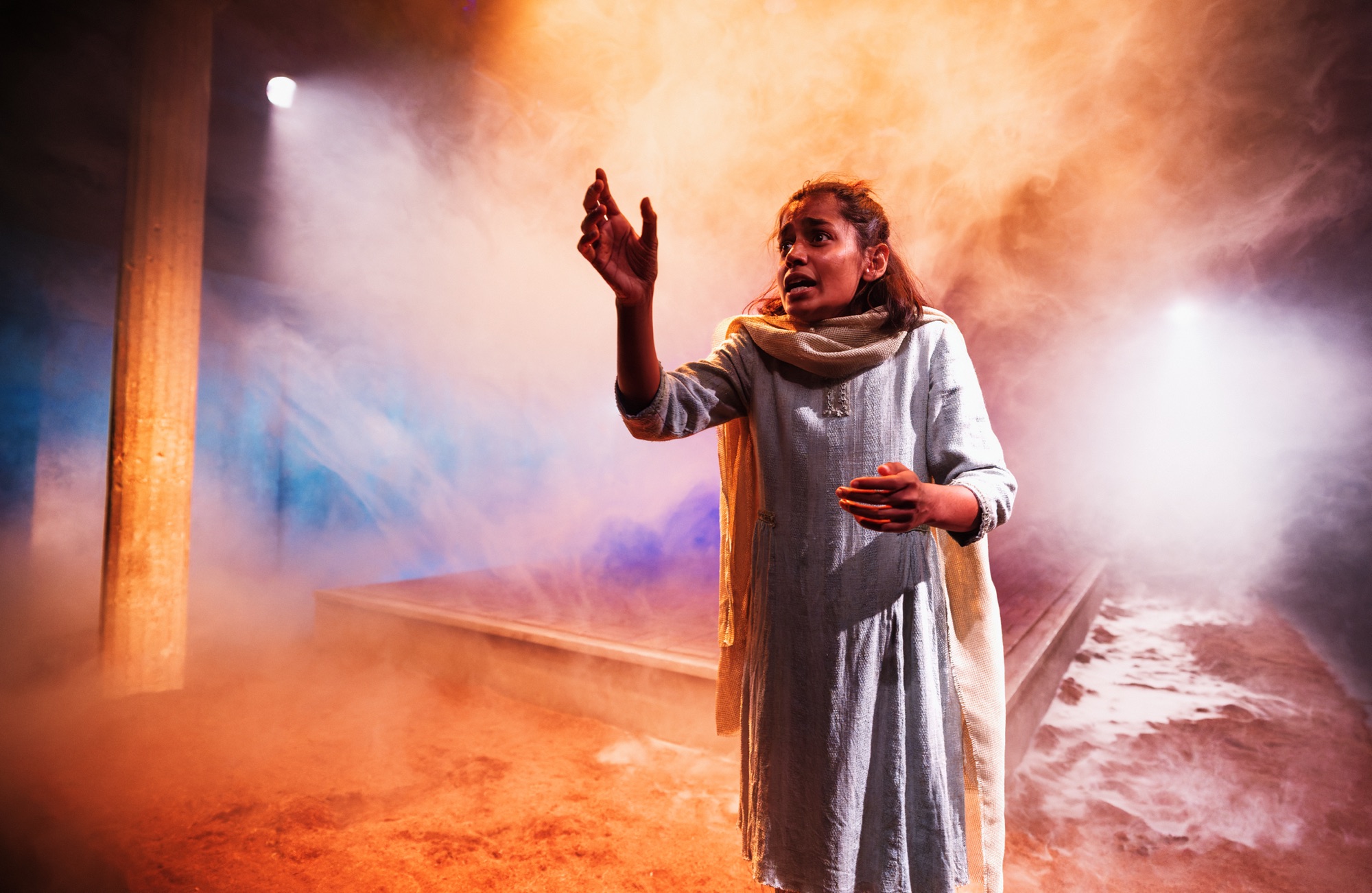
And in such a beguiling, spirited, devastating performance by Linnea Berthelsen, a constant backdrop to her experiences is the big metal skeleton in the city. Introduced by America, along with new and exciting candy and snacks and treats and distraction.
And we see ‘her’ find her first love – something which does not endure, but leaves in its wake a pregnancy.
And then, after being taken on a journey of her life from 8 to 18, we’re in a place where what comes next is not only horror of a conceptual nature, but is delivered to a place where the writer, director and performer have already created a deep connection between ourselves and the art.


The remainder of the performance was powerful and unflinching in its execution.
With topics such as stillbirth, there is a responsibility by the artist to land them in such a way that the messaging and importance is realised by the audience, but not in a two-dimensional way that purely amounts to shock tactics and resorts to grabbing the person by the throat with a demand to take note.
Darkling achieves this beautifully.
The first 60 minutes paves the way in ensuring that the final 30 minutes is received with understanding, empathetic feeling and a deepened curiosity to learn more of an event that is still felt in its effects today, and carries with it opportunities for learning and understanding.
Written by Titas Halder and directed by Matthew Xia, Darkling captured my attention but more importantly, has held it.
At HOME Mcr, until Saturday 14 November. For full details and to book tickets, visit Darkling — A damning new play from Titas Halder | HOME
Production images: Alex Brenner


Leave a Reply